
Mudi: breed guide
An observant farm dog with alert ears and natural waves
History and origins
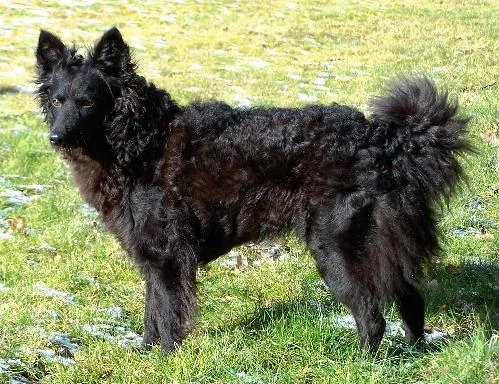
The Mudi's beauty is uncomplicated: a wedge-shaped head, upright ears and a body with waves and curls. Its story is equally about usefulness. The FCI places its development in the eighteenth and nineteenth centuries, probably through crosses between Hungarian herding dogs and German herding dogs with upright ears. These were populations of working dogs before they were clearly defined modern breeds.
The Royal Kennel Club states that the Mudi was formally identified as a breed in 1936. That year marks a step in its description, not the beginning of dogs doing this work. It therefore combines an older farming background with a relatively recent written identity. Its history also invites you to look at the less familiar dogs that helped carry everyday work in the countryside.
Breed reference: FCI standard for Mudi.
Appearance, colours and coat
The Mudi has upright ears, short hair on its head and legs, and waves or curls over the body. The 2023 FCI standard lists black, white, fawn, ash (blue), liver, ash-brown and cifra (merle). Colour alone tells you little about temperament or whether a particular dog suits your household.
Read the official FCI standard. A breed standard describes the desired type; it does not promise the behaviour or health of an individual dog.
Character and temperament
The Mudi is an alert working herder. The FCI emphasises courage and its use with challenging livestock. Breed-club information published by the Royal Kennel Club also discusses independent thinking, affection and the importance of understanding vocal and herding behaviour.
Translate such general traits into a plan for the individual dog. Provide choices within clear boundaries, reward attention to you and practise calm responses to movement. A dog that notices a great deal benefits from learning that it does not have to react to everything. Let introductions happen gradually and build confidence through manageable experiences.
Breed reference: FCI standard for Mudi.
Coat care and everyday grooming
The coat calls for a different commitment from the cords of a Puli or Komondor. Hair is shorter on the head and legs; it forms waves on the body. The published breed-club information describes relatively straightforward care, with attention to loose hair, dirt and any knots.
Use grooming time to check comfort rather than pursue a completely uniform appearance. Examine the feet after outdoor activity, check the collar and harness and make handling familiar. Include teeth and nails. Ask a breeder to show how a normal coat for this breed looks and feels.
Exercise and activities
Give a Mudi opportunities to think and move. Alternate sniffing walks with small exercises and games where listening and cooperation matter. Finding a hidden object can contribute as much to a good day as covering another stretch of street. Build physical exertion gradually and reserve time for rest. If all the activities make the dog increasingly restless, simplify the programme and seek guidance.
Training and learning
Reward the behaviour you want to see again. Practise one useful skill at a time: coming when called, walking comfortably on a lead, settling and accepting gentle handling. Start where your dog can succeed, keep lessons brief and add distractions gradually. Use the breed’s original role as context, then adapt to your individual dog. Intelligence does not replace patient teaching.
Training approach: Dogs Trust: positive reinforcement and rewards.
Health and responsible ownership
For a less common breed, openness about health and family history is especially valuable. Ask the national breed club which screening is relevant and inspect actual results. A working background does not automatically mean every dog is healthy. A veterinarian can help adapt growth, weight and exercise plans to your dog. Note unexpected changes in appetite, walking or behaviour, so patterns are easier to discuss.
Family life and suitability
The Mudi may appeal to someone who enjoys close cooperation and seeks an observant companion. Think about a dog that may be vocal and respond strongly to movement. Can you remain consistent on quiet workdays too? Meet adults from the lines you are considering: energy and sensitivity vary. With patience, shared activities and suitable daily habits, its modest appearance can conceal an exceptionally rich partnership.
Choosing and raising a puppy
Before choosing a Mudi puppy, meet adult dogs and ask how the parents live day to day. Request the actual health-screening documents recommended by your country’s breed club. Discuss family history and what support the breeder provides after the puppy comes home. Plan company, supervision, grooming and a quiet resting place before arrival.
Introduce people, ordinary sounds and gentle handling in small, pleasant steps. Give the puppy room to retreat and stop an interaction when it becomes worried or overwhelmed. Ask your veterinarian which outings are suitable around the vaccination programme. Adapt exercise to the growing dog rather than copying an adult’s routine; there is no single exercise prescription that suits every puppy.
Further guidance: Dogs Trust: puppy socialisation.
Compare related breeds
Compare the Mudi with the Puli and Pumi as three distinct herding breeds. The Mudi’s wavy coat differs from Puli cords and Pumi curls. Ask owners about handling, voice and ordinary household routines; selecting only by grooming needs overlooks the dog behind the coat.
Frequently asked questions
Is a Mudi a good family dog?
Consider the individual dog, its daily needs and your household routine. Meet adults, discuss children and other animals with experienced owners, supervise interactions and provide a resting place where the dog is undisturbed.
How much exercise does this breed need?
Combine suitable movement, sniffing, short lessons and rest. Age, fitness, weather and health change what is appropriate. The exercise section above offers activities; a veterinarian can help adapt the plan for a growing, older or unwell dog.
What should I ask a breeder?
Ask to meet the dogs, inspect the relevant parental health-screening documents and discuss temperament, daily care, puppy experiences and ongoing support. A test result reduces uncertainty about a particular issue; it cannot guarantee lifelong health.
Which coat routine should I follow?
The coat calls for a different commitment from the cords of a Puli or Komondor. Hair is shorter on the head and legs; it forms waves on the body. The published breed-club information describes relatively straightforward care, with attention to loose hair, dirt and any knots.
Where can I share photos and ask other owners?
Visit the community through the link below. Owner experiences can be helpful context, but they do not replace a veterinarian’s assessment of a health concern.
Sources and editorial notes
This English edition combines the existing English breed stories with additional appearance, puppy, comparison and FAQ sections. Breed standards describe typical breed traits. Practical guidance should be adapted to the individual dog; ask your national breed club for current screening recommendations.