
Puli: breed guide
A small shepherd with a remarkable coat and a big personality
History and origins
Before the Puli became a dog that made people stop in the street, it was a dog that helped a shepherd's work move forward. Its story belongs to livestock, open landscapes and cooperation between people and working dogs. The FCI describes a Hungarian herding breed with Asian roots, whose ancestors probably arrived in the Carpathian Basin with the migrating Magyars. That word 'probably' matters: an old ancestry is plausible, but there is no reliable birth date for the modern Puli.
The Hungarian breed club also describes a past in which the names Puli and Pumi were sometimes used interchangeably. Organised breeding and written breed standards gave the familiar breeds clearer boundaries. This makes the history more interesting than a single impressive age: the Puli connects practical farm work with the deliberate preservation of a distinctive companion dog.
Breed reference: FCI standard for Puli.
Appearance, colours and coat
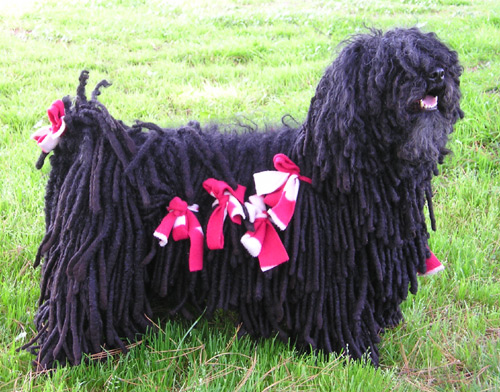
The Puli is a compact Hungarian herding dog, recognisable by its developing corded coat. The FCI lists pearl white, black, black with rust-red or grey shading, fawn and grey varieties. The coat is a defining feature, but the dog’s comfort and sound movement matter more than its appearance.
Read the official FCI standard. A breed standard describes the desired type; it does not promise the behaviour or health of an individual dog.
Character and temperament
Beneath the moving cords is an observant dog that enjoys learning. The breed standard emphasises liveliness, learning ability and watchfulness. It is easy to imagine why a shepherd valued that combination: a dog had to notice changes, respond quickly and remain engaged with its task.
At home, you can turn that attention into useful habits. Reward calm greetings, practise recall and teach the dog where to relax when visitors arrive. Its enthusiasm is appealing, but everyday life becomes more pleasant when everyone uses the same cues. Teach children to invite contact and respect rest, without pulling at that fascinating coat.
Breed reference: FCI standard for Puli.
Coat care and everyday grooming
The coat starts out soft and develops its characteristic cords as the dog grows. Treat grooming as a skill to learn from an experienced breeder or groomer. Ask for a demonstration with a dog at a similar stage of coat development. Discuss how to separate developing cords, keep sensitive areas clean and recognise skin discomfort.
Plan baths so the dog can dry completely. After muddy walks, check the feet, underside and skin you can reach gently. Make nail care, tooth brushing and calm handling familiar from puppyhood too. A beautiful coat only has value when the dog beneath it feels comfortable.
Exercise and activities
A good day offers movement and small mental challenges. A walk with sniffing time, a brief game and rest afterwards provide different kinds of satisfaction. Try asking the dog to find a hidden toy or explore a new walking route. Adapt the demands to age, fitness and weather. Learning to relax belongs in the programme just as much as learning to move.
Training and learning
Reward the behaviour you want to see again. Practise one useful skill at a time: coming when called, walking comfortably on a lead, settling and accepting gentle handling. Start where your dog can succeed, keep lessons brief and add distractions gradually. Use the breed’s original role as context, then adapt to your individual dog. Intelligence does not replace patient teaching.
Training approach: Dogs Trust: positive reinforcement and rewards.
Health and responsible ownership
Before choosing a puppy, ask which screening the breed club in your country recommends and inspect the parents' actual results. Discuss those documents and family history with a veterinarian. Keep track of weight, appetite, movement and skin comfort: gradual changes become easier to notice. A breed description cannot predict an individual dog's health. Openness and evidence are more valuable than a promise of perfect puppies.
Family life and suitability
A Puli may suit someone who enjoys an engaged companion and wants to learn specialist coat care. Meet adult dogs before deciding: the mature coat, voice and energy tell you more than a puppy photograph. Think about an ordinary Tuesday too. Who provides company, care and consistent training? With realistic answers, an old working relationship can grow into a rich modern friendship.
Choosing and raising a puppy
Before choosing a Puli puppy, meet adult dogs and ask how the parents live day to day. Request the actual health-screening documents recommended by your country’s breed club. Discuss family history and what support the breeder provides after the puppy comes home. Plan company, supervision, grooming and a quiet resting place before arrival.
Introduce people, ordinary sounds and gentle handling in small, pleasant steps. Give the puppy room to retreat and stop an interaction when it becomes worried or overwhelmed. Ask your veterinarian which outings are suitable around the vaccination programme. Adapt exercise to the growing dog rather than copying an adult’s routine; there is no single exercise prescription that suits every puppy.
Further guidance: Dogs Trust: puppy socialisation.
A puppy’s soft coat is not the finished adult corded coat. Arrange a practical demonstration with a breeder or groomer experienced in this breed, and learn how coat development changes the routine.
Compare related breeds
Puli versus Pumi starts with coat and working style: cords on the Puli, curly tufts on the Pumi. Compare both adult dogs in person. Puli versus Komondor is a larger difference: one is a herder and the other a much larger livestock guardian.
Frequently asked questions
Is a Puli a good family dog?
Consider the individual dog, its daily needs and your household routine. Meet adults, discuss children and other animals with experienced owners, supervise interactions and provide a resting place where the dog is undisturbed.
How much exercise does this breed need?
Combine suitable movement, sniffing, short lessons and rest. Age, fitness, weather and health change what is appropriate. The exercise section above offers activities; a veterinarian can help adapt the plan for a growing, older or unwell dog.
What should I ask a breeder?
Ask to meet the dogs, inspect the relevant parental health-screening documents and discuss temperament, daily care, puppy experiences and ongoing support. A test result reduces uncertainty about a particular issue; it cannot guarantee lifelong health.
Which coat routine should I follow?
The coat starts out soft and develops its characteristic cords as the dog grows. Treat grooming as a skill to learn from an experienced breeder or groomer. Ask for a demonstration with a dog at a similar stage of coat development. Discuss how to separate developing cords, keep sensitive areas clean and recognise skin discomfort.
Where can I share photos and ask other owners?
Visit the community through the link below. Owner experiences can be helpful context, but they do not replace a veterinarian’s assessment of a health concern.
Puli heritage: preservation, war and recovery
The Puli’s distinctive cords are often the first thing people notice. Behind that remarkable coat lies a long relationship between people and working dogs: a story of Hungarian shepherds, skilled helpers, devastating losses and determined recovery.
The breed’s exact age is uncertain. The American Kennel Club describes roots reaching back about a thousand years, with the ancestors of these dogs thought to have accompanied the Magyars to Europe. This concerns an old working-dog type, rather than a thousand years of modern pedigree registration. Claims of much older origins also exist, but pictures of similar dogs do not prove a continuous line of descent to today’s Puli.
The Hungarian Puli Club cites a description from 1751 of a sheepdog with a curly, matted coat. It also explains that Puli and Pumi were once names used interchangeably. The distinct breeds familiar today acquired clearer boundaries through later research and organised breeding.
For shepherds, ability mattered. A useful Puli had to remain alert, respond quickly and move sheep effectively. The Canadian breed club’s history describes shepherds sometimes paying a year’s wages for an outstanding dog, illustrating the value of a dependable working partner.
In the early twentieth century, veterinarian and researcher Dr Emil Raitsits helped define and preserve Hungarian herding breeds. The Hungarian Puli Club describes his work collecting suitable dogs, improving records and organising exhibitions. In 1924 he established a separate registry organisation for Hungarian breeds, giving their preservation a more organised foundation as pastoral life changed.
The Second World War severely disrupted that work. According to the German Puli Club, German and later Russian soldiers shot many watchful Pulik defending homes and yards. Food shortages and a lack of medicines added to the losses. The American Kennel Club also describes dogs killed by bombs and bullets and badly damaged breeding lines. Hungarian breeding was brought close to destruction; the sources used here do not establish an exact number of surviving dogs.
The German club recounts how Ilona Orlay, a former assistant of Raitsits, moved breeding records through burning Budapest on a handcart to keep them safe. These records later helped support the rebuilding of the breeding population.
Recovery took years. The same club describes a small show in March 1948 as an early opportunity to assess the remaining breeding dogs. Breeding gradually recovered from around 1950, and the population’s spread later approached its pre-war level. Lines also existed overseas: four Pulik imported to the United States for research in 1935 subsequently passed to private breeders and contributed to the American population.
The Puli continued through dogs that survived those difficult years. Its survival reflects the dedication of shepherds, researchers and breeders who preserved the dogs and their history. Beneath the moving cords is the legacy of a small working companion that meant a great deal to the people alongside it.
Sources and editorial notes
This English edition combines the existing English breed stories with additional appearance, puppy, comparison and FAQ sections. Breed standards describe typical breed traits. Practical guidance should be adapted to the individual dog; ask your national breed club for current screening recommendations.