
Komondor: breed guide
An impressive white guardian shaped by life beside the flock
History and origins
The Komondor makes an extraordinary first impression, but its deepest story is about responsibility. Beneath the long ivory cords is a powerful dog associated with guarding livestock and property. The FCI describes an old Hungarian breed with Asian roots and links it to migrating Magyar livestock keepers. The Hungarian Komondor club's historical account also shows how old dog names and descriptions became mixed together. Claims about one exact origin date therefore deserve caution.
What clearly remains is its purpose: a large guardian that took its task seriously. The coat and imposing silhouette are unforgettable, but belong to a working identity. Understanding that background is the first step towards appreciating the breed fairly and assessing whether your everyday life fits it.
Breed reference: FCI standard for Komondor.
Appearance, colours and coat
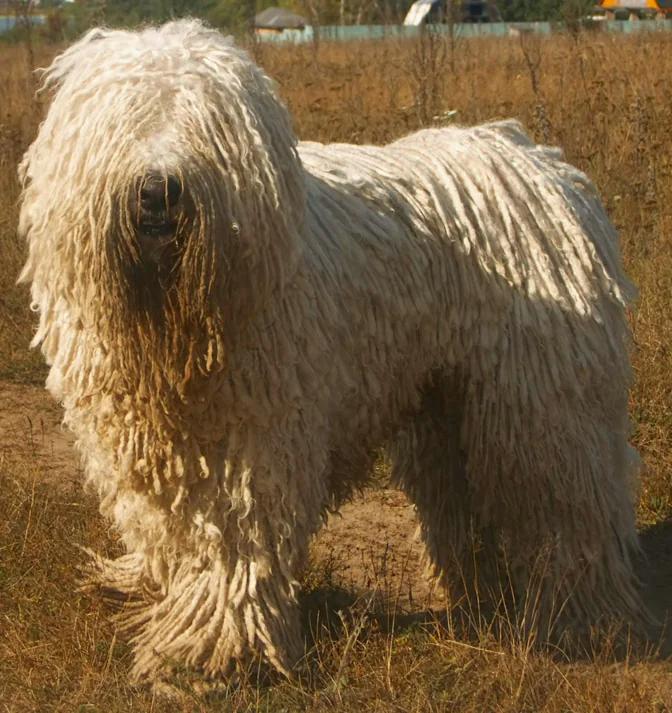
The Komondor is a large livestock guardian with an ivory corded coat. The FCI gives a minimum shoulder height of 70 cm for males and 65 cm for females. Its size and protective working background distinguish it from the smaller, active herding Puli; a similar-looking coat does not imply the same daily needs.
Read the official FCI standard. A breed standard describes the desired type; it does not promise the behaviour or health of an individual dog.
Character and temperament
The breed standard emphasises courage, guarding and a reserved manner. That background has practical implications in a family. Introductions need preparation, boundaries must be clear and the owner is responsible for the environment.
Use patient training with rewards and practise the routines that genuinely matter: comfortable lead walking, moving away when asked, calm handling and relaxing during visits. Do not make protective behaviour into a game. Help the dog recognise familiar situations and make calm choices. Its size means thoughtful guidance matters while it is still a puppy, well before it develops adult strength.
Breed reference: FCI standard for Komondor.
Coat care and everyday grooming
The developing corded coat requires a substantial practical commitment. Before acquiring a dog, arrange a demonstration with an experienced breeder or groomer specialising in the breed. Learn how care changes during growth, how to keep cords appropriately separated and how to inspect the skin without pulling.
Discuss bathing facilities, complete drying and keeping the underside, mouth area and feet clean. Consider the space and equipment for a large wet dog too. Connect coat care with comfortable handling, nail maintenance and dental care. An impressive appearance comes from regular care and must never become more important than the dog's welfare.
Exercise and activities
Adapt exercise to your dog's life stage and fitness. Regular walks, exploration time and calm contact form a good foundation. Young large dogs benefit from gradual increases and surfaces that provide secure footing. Discuss growth and heavier exertion with a veterinarian. Even with a garden, shared walks and training remain valuable for getting to know the world beyond the dog's own territory.
Training and learning
Reward the behaviour you want to see again. Practise one useful skill at a time: coming when called, walking comfortably on a lead, settling and accepting gentle handling. Start where your dog can succeed, keep lessons brief and add distractions gradually. Use the breed’s original role as context, then adapt to your individual dog. Intelligence does not replace patient teaching.
Training approach: Dogs Trust: positive reinforcement and rewards.
Health and responsible ownership
Ask about parental screening, family health and how the breeder raises large puppies. Check with the breed club and veterinarian which screening is currently recommended. Maintain an appropriate weight and watch for changes in walking, appetite and getting up. The thick coat makes body condition difficult to assess by sight; therefore learn a comfortable hands-on check. Notes and timely conversations provide more guidance than assumptions based on size.
Family life and suitability
The Komondor deserves a considered choice, particularly when photographs are the initial attraction. Think about visitors, deliveries, secure boundaries, bathing space and guiding a powerful adult guardian. Meet adults in recognisable situations and ask owners about everyday challenges. In a suitable environment it can be an exceptional companion. Choose its whole personality and needs as consciously as its unforgettable appearance.
Choosing and raising a puppy
Before choosing a Komondor puppy, meet adult dogs and ask how the parents live day to day. Request the actual health-screening documents recommended by your country’s breed club. Discuss family history and what support the breeder provides after the puppy comes home. Plan company, supervision, grooming and a quiet resting place before arrival.
Introduce people, ordinary sounds and gentle handling in small, pleasant steps. Give the puppy room to retreat and stop an interaction when it becomes worried or overwhelmed. Ask your veterinarian which outings are suitable around the vaccination programme. Adapt exercise to the growing dog rather than copying an adult’s routine; there is no single exercise prescription that suits every puppy.
Further guidance: Dogs Trust: puppy socialisation.
A puppy’s soft coat is not the finished adult corded coat. Arrange a practical demonstration with a breeder or groomer experienced in this breed, and learn how coat development changes the routine.
Compare related breeds
Komondor versus Puli is a useful comparison because both have cords, yet their original jobs differ. The Komondor guards livestock, while the Puli herds. The Kuvasz is another large guardian, with a wavy rather than corded coat. Meet adult guardians before deciding.
Frequently asked questions
Is a Komondor a good family dog?
Consider the individual dog, its daily needs and your household routine. Meet adults, discuss children and other animals with experienced owners, supervise interactions and provide a resting place where the dog is undisturbed.
How much exercise does this breed need?
Combine suitable movement, sniffing, short lessons and rest. Age, fitness, weather and health change what is appropriate. The exercise section above offers activities; a veterinarian can help adapt the plan for a growing, older or unwell dog.
What should I ask a breeder?
Ask to meet the dogs, inspect the relevant parental health-screening documents and discuss temperament, daily care, puppy experiences and ongoing support. A test result reduces uncertainty about a particular issue; it cannot guarantee lifelong health.
Which coat routine should I follow?
The developing corded coat requires a substantial practical commitment. Before acquiring a dog, arrange a demonstration with an experienced breeder or groomer specialising in the breed. Learn how care changes during growth, how to keep cords appropriately separated and how to inspect the skin without pulling.
Where can I share photos and ask other owners?
Visit the community through the link below. Owner experiences can be helpful context, but they do not replace a veterinarian’s assessment of a health concern.
Sources and editorial notes
This English edition combines the existing English breed stories with additional appearance, puppy, comparison and FAQ sections. Breed standards describe typical breed traits. Practical guidance should be adapted to the individual dog; ask your national breed club for current screening recommendations.