
Kuvasz: breed guide
White-coated strength with a long tradition of watchfulness
History and origins
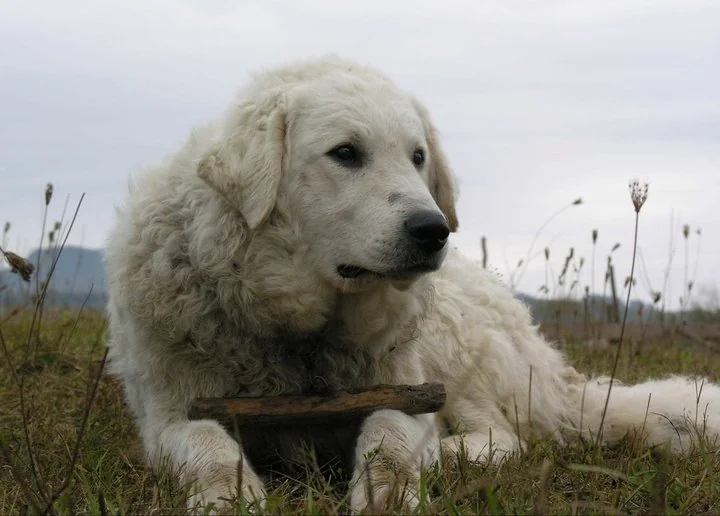
The Kuvasz has a different appearance from Hungary's corded guardians. Its white coat reveals the outline of a strong, athletic dog, and its history centres on protection. The FCI describes an old Hungarian shepherd dog whose ancestors reached the Carpathian Basin with the Magyars. The standard records guarding flocks against predators and thieves, and an association with hunting in the time of King Matthias Corvinus.
These are historical traditions of working dogs, not an exact starting date for the modern breed. As livestock keeping changed, work also shifted towards houses and property. Its story shows continuity within changing surroundings: the setting became a village or household, while alertness remained part of its identity.
Breed reference: FCI standard for Kuvasz.
Appearance, colours and coat
The Kuvasz is a large Hungarian guardian with a dense, wavy coat. The standard specifies white, with ivory permitted. FCI shoulder heights are 71–76 cm for males and 66–70 cm for females. Unlike the Komondor, its coat does not form the breed’s characteristic long cords.
Read the official FCI standard. A breed standard describes the desired type; it does not promise the behaviour or health of an individual dog.
Character and temperament
Include the guardian background in your preparations for living together. Appreciation starts with respecting the dog's attention to its surroundings and providing clear, predictable guidance. Adapt introductions to unfamiliar people to the individual dog.
Teach everyday skills patiently: relaxed lead walking, recall, accepting handling and resting away from the front door. Introduce visitors carefully and reward calm behaviour. Children and dogs need guidance and undisturbed resting places. The aim is a dependable relationship where the human organises situations, so the dog does not have to make every decision itself.
Breed reference: FCI standard for Kuvasz.
Coat care and everyday grooming
Develop a care routine that lets you work comfortably through the coat and inspect the skin. Ask an experienced owner or groomer which tools are suitable. Short, regular sessions are easier to maintain than an occasional long struggle with a dog experiencing discomfort.
After muddy or rough-country walks, examine the feet and check areas under the collar and harness. Practise brushing, nail checks and dental care when the dog is relaxed, with rewards for cooperation. Account for the practical life of a large white dog in wet weather: enough towels, a suitable resting place and time to become comfortably clean and dry.
Exercise and activities
A good day includes regular movement, exploration and contact with household members. Outdoor space can be useful, but does not replace walking and learning away from home. Build activity gradually during growth and discuss physical demands with a veterinarian. Keep exercises short enough to remain enjoyable. Practising a calm pause during a walk can be as valuable as continually extending the route.
Training and learning
Reward the behaviour you want to see again. Practise one useful skill at a time: coming when called, walking comfortably on a lead, settling and accepting gentle handling. Start where your dog can succeed, keep lessons brief and add distractions gradually. Use the breed’s original role as context, then adapt to your individual dog. Intelligence does not replace patient teaching.
Training approach: Dogs Trust: positive reinforcement and rewards.
Health and responsible ownership
Ask the breeder for documented screening and an honest conversation about health in close relatives. Check current advice with the breed club and veterinarian; recommendations differ between countries and can change. Learn to assess body condition beneath the coat and track weight and ease of movement. A strong-looking dog can need care too. A breeder who explains limitations offers more useful information than a general promise of robustness.
Family life and suitability
The Kuvasz may suit a home prepared for a large dog with guardian instincts. Think about secure boundaries, visitor routines, exercise space and experience with powerful dogs. Meet adults and ask owners about difficult days as well as pleasant moments. A good relationship rests on patient training, realistic guidance and respect for its background. Its beauty invites you to get acquainted; its daily needs determine whether you remain a good match.
Choosing and raising a puppy
Before choosing a Kuvasz puppy, meet adult dogs and ask how the parents live day to day. Request the actual health-screening documents recommended by your country’s breed club. Discuss family history and what support the breeder provides after the puppy comes home. Plan company, supervision, grooming and a quiet resting place before arrival.
Introduce people, ordinary sounds and gentle handling in small, pleasant steps. Give the puppy room to retreat and stop an interaction when it becomes worried or overwhelmed. Ask your veterinarian which outings are suitable around the vaccination programme. Adapt exercise to the growing dog rather than copying an adult’s routine; there is no single exercise prescription that suits every puppy.
Further guidance: Dogs Trust: puppy socialisation.
Compare related breeds
Kuvasz versus Komondor compares two large Hungarian guardians with very different coats: wavy hair and long cords. Compare management of visitors, fencing, handling and mature size as carefully as appearance. Neither should be chosen simply as a large version of a smaller herding dog.
Frequently asked questions
Is a Kuvasz a good family dog?
Consider the individual dog, its daily needs and your household routine. Meet adults, discuss children and other animals with experienced owners, supervise interactions and provide a resting place where the dog is undisturbed.
How much exercise does this breed need?
Combine suitable movement, sniffing, short lessons and rest. Age, fitness, weather and health change what is appropriate. The exercise section above offers activities; a veterinarian can help adapt the plan for a growing, older or unwell dog.
What should I ask a breeder?
Ask to meet the dogs, inspect the relevant parental health-screening documents and discuss temperament, daily care, puppy experiences and ongoing support. A test result reduces uncertainty about a particular issue; it cannot guarantee lifelong health.
Which coat routine should I follow?
Develop a care routine that lets you work comfortably through the coat and inspect the skin. Ask an experienced owner or groomer which tools are suitable. Short, regular sessions are easier to maintain than an occasional long struggle with a dog experiencing discomfort.
Where can I share photos and ask other owners?
Visit the community through the link below. Owner experiences can be helpful context, but they do not replace a veterinarian’s assessment of a health concern.
Sources and editorial notes
This English edition combines the existing English breed stories with additional appearance, puppy, comparison and FAQ sections. Breed standards describe typical breed traits. Practical guidance should be adapted to the individual dog; ask your national breed club for current screening recommendations.