
Transylvanian Hound: breed guide
The Transylvanian Hound: a determined tracker from the Carpathians
History and origins
The Transylvanian Hound, or Erdélyi Kopó, takes the story into the forest. The FCI describes an old Hungarian hunting breed shaped by climate, terrain and hunting conditions. It was important in aristocratic hunting during the Middle Ages. Changes in agriculture and forestry moved the work into the Carpathian forests; different conditions contributed to long-legged and short-legged forms.
The standard records a serious decline at the beginning of the twentieth century and the resumption of purposeful breeding in 1968. That is a preservation milestone, not an origin date. The modern breed therefore also tells a story of people who wanted to preserve a distinctive working tradition. Its build for sustained movement and ability to follow a trail remain important parts of its identity.
Breed reference: FCI standard for Transylvanian Hound.
Appearance, colours and coat
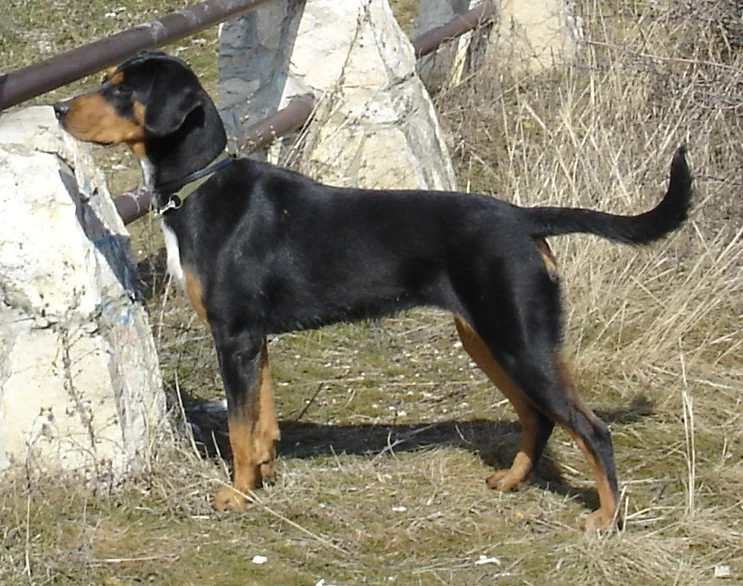
The Transylvanian Hound, or Erdélyi Kopó, has a short, dense coat and a build intended for sustained movement. Its primary colour is black with tan markings; the standard also describes permitted white markings. It is a scent hound, a different working type from the Vizsla’s pointing role and the Magyar Agár’s sight-based hunting.
Read the official FCI standard. A breed standard describes the desired type; it does not promise the behaviour or health of an individual dog.
Character and temperament
The FCI describes a good-natured, courageous and determined dog that can work independently at a distance from its handler. The standard also mentions its voice during hunting. These provide useful clues for family life: scent, persistence and audible communication belong in the ownership plan.
Train with patient repetition and appealing rewards. Practise recall in manageable settings, comfortable lead walking and relaxing quietly at home. A dog that listens well indoors does not automatically respond as quickly beside an interesting trail. Make success achievable by choosing the right environment and increasing difficulty gradually.
Breed reference: FCI standard for Transylvanian Hound.
Coat care and everyday grooming
The standard describes a short, dense coat with undercoat. Regular grooming can remain practical and pleasant while offering a chance to examine skin and condition. After walks through vegetation, check feet, ears and areas under harness or collar where dirt collects.
Teach ear checks, nail care and tooth brushing in brief sessions with rewards. Ask a veterinarian how to recognise discomfort and when an ear should be examined rather than cleaned further. Have suitable tools and towels ready. Care works best as an ordinary part of being together, not as a struggle after one particularly muddy walk.
Exercise and activities
Think about exploration and meaningful activity. A walk with safe sniffing opportunities allows the dog to use an important part of its working past. Simple search games and short training bring variety without continually demanding greater distances. Use a lead or secure fence when a fresh trail could draw the dog away. Build exertion with attention to terrain and weather, then allow calm recovery.
Training and learning
Reward the behaviour you want to see again. Practise one useful skill at a time: coming when called, walking comfortably on a lead, settling and accepting gentle handling. Start where your dog can succeed, keep lessons brief and add distractions gradually. Use the breed’s original role as context, then adapt to your individual dog. Intelligence does not replace patient teaching.
Training approach: Dogs Trust: positive reinforcement and rewards.
Health and responsible ownership
For a less common breed, seek well-informed advice from the breed club and a breeder who shares actual information. Ask about screening, health in close relatives and matters owners should watch. A veterinarian helps assess answers and plan suitable growth and physical demands. Note appetite, weight, movement and recovery. Investigate lasting changes promptly, rather than assuming a persistent hunting dog can manage discomfort.
Family life and suitability
This hound may appeal to someone who enjoys outdoor walks, search activities and an independently thinking dog. Consider safe exercise, how a dog's voice fits your surroundings and the patience needed for reliable habits. Meet adults and discuss companion life with experienced owners. A suitable owner welcomes the tracking character while providing clear guidance, company and a realistic daily routine.
Choosing and raising a puppy
Before choosing a Transylvanian Hound puppy, meet adult dogs and ask how the parents live day to day. Request the actual health-screening documents recommended by your country’s breed club. Discuss family history and what support the breeder provides after the puppy comes home. Plan company, supervision, grooming and a quiet resting place before arrival.
Introduce people, ordinary sounds and gentle handling in small, pleasant steps. Give the puppy room to retreat and stop an interaction when it becomes worried or overwhelmed. Ask your veterinarian which outings are suitable around the vaccination programme. Adapt exercise to the growing dog rather than copying an adult’s routine; there is no single exercise prescription that suits every puppy.
Further guidance: Dogs Trust: puppy socialisation.
Compare related breeds
Transylvanian Hound versus Vizsla compares scent-hound and pointing-dog traditions. Compare the Magyar Agár for a sight-based hunting background. Discuss lead walking, voice and safe exercise with experienced owners; the shared word “hunting” is too broad to guide a choice by itself.
Frequently asked questions
Is a Transylvanian Hound a good family dog?
Consider the individual dog, its daily needs and your household routine. Meet adults, discuss children and other animals with experienced owners, supervise interactions and provide a resting place where the dog is undisturbed.
How much exercise does this breed need?
Combine suitable movement, sniffing, short lessons and rest. Age, fitness, weather and health change what is appropriate. The exercise section above offers activities; a veterinarian can help adapt the plan for a growing, older or unwell dog.
What should I ask a breeder?
Ask to meet the dogs, inspect the relevant parental health-screening documents and discuss temperament, daily care, puppy experiences and ongoing support. A test result reduces uncertainty about a particular issue; it cannot guarantee lifelong health.
Which coat routine should I follow?
The standard describes a short, dense coat with undercoat. Regular grooming can remain practical and pleasant while offering a chance to examine skin and condition. After walks through vegetation, check feet, ears and areas under harness or collar where dirt collects.
Where can I share photos and ask other owners?
Visit the community through the link below. Owner experiences can be helpful context, but they do not replace a veterinarian’s assessment of a health concern.
Sources and editorial notes
This English edition combines the existing English breed stories with additional appearance, puppy, comparison and FAQ sections. Breed standards describe typical breed traits. Practical guidance should be adapted to the individual dog; ask your national breed club for current screening recommendations.