
Vizsla: breed guide
Russet-gold elegance and the warmth of a close partnership
History and origins
The Vizsla's story brings movement, scent and cooperation with people together. The FCI records descriptions and illustrations in fourteenth-century documents, growing importance as a hunting dog from the eighteenth century and organised modern breeding from 1920. The standard also mentions FCI recognition in 1936. These are different milestones: old references, development and official recognition do not together establish an exact age.
The Hungarian Vizsla Club describes how dogs that went abroad with emigrants helped establish the breed beyond Hungary. There is therefore a story of preservation behind the familiar golden silhouette too. The Vizsla carries its hunting past into families where companionship and going outdoors together are now often the main purpose.
Breed reference: FCI standard for Vizsla.
Appearance, colours and coat
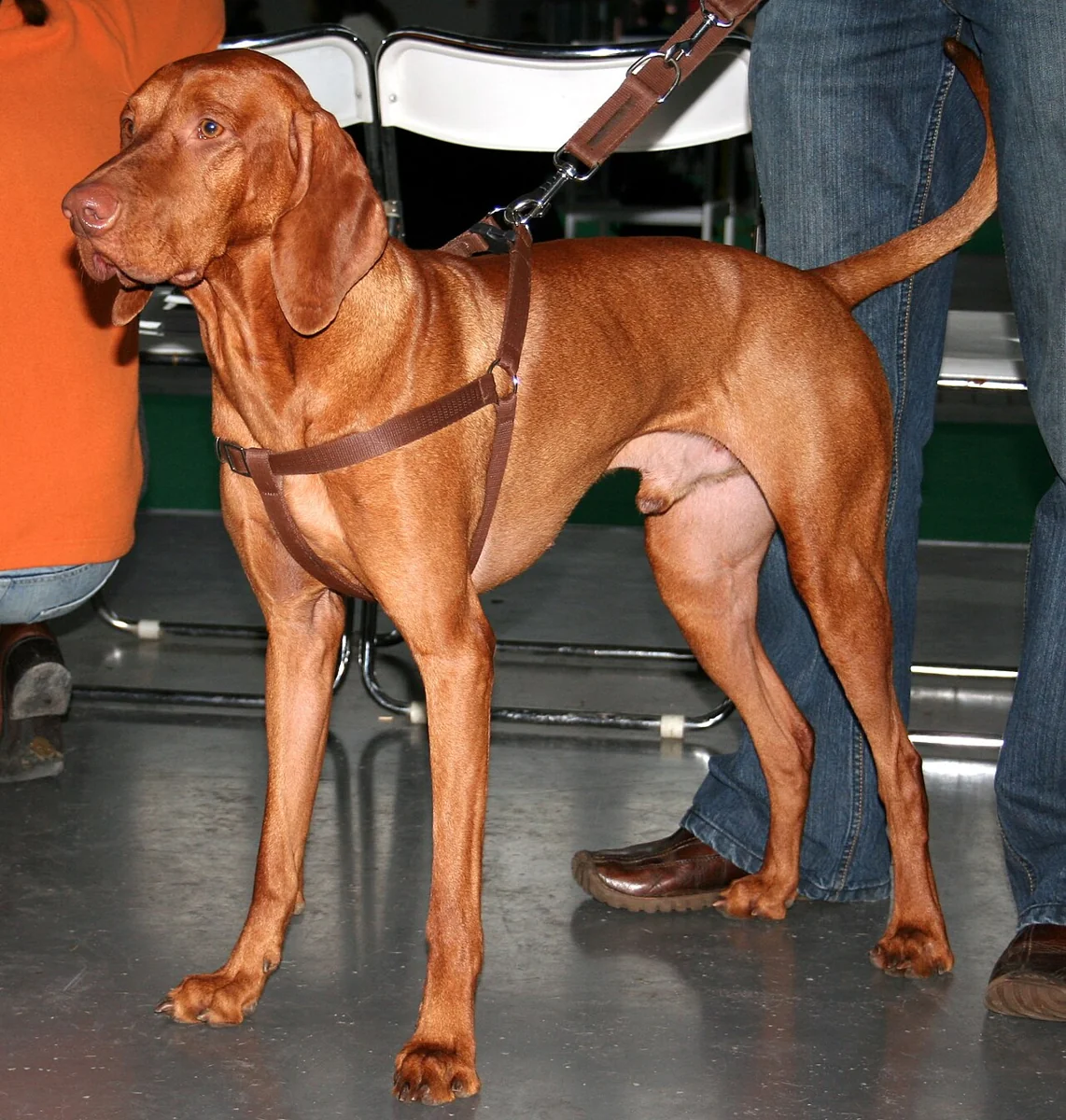
The short-haired Vizsla has a lean, athletic outline and a short coat in shades of russet gold. It is a pointing dog, with a separate FCI standard from the Wirehaired Vizsla. Similar colouring should not obscure the difference between a smooth coat and a rough coat with a beard.
Read the official FCI standard. A breed standard describes the desired type; it does not promise the behaviour or health of an individual dog.
Character and temperament
The FCI describes a lively, friendly dog that seeks contact with its handler during work and does not cope well with harsh treatment. This makes a close partnership understandable: it is active and capable, while the relationship remains important.
Build trust through consistent, rewarding lessons. Practise recall, polite greetings and comfortable resting. Introduce being alone in manageable small steps rather than as a sudden change. The need for contact is enjoyable when the household also helps the dog feel safe during ordinary short absences and quiet moments.
Breed reference: FCI standard for Vizsla.
Coat care and everyday grooming
The short coat makes a practical care routine straightforward, but still offers opportunities to examine skin, feet and comfort. After outdoor activities, check for dirt and rubbing from harness or collar. Teach tooth brushing, nail maintenance and ear checks in small positive steps.
Watch the individual dog's comfort in cold and rain and provide a dry resting place after walks. Keep care manageable: a towel by the door, familiar tools and a routine that works on busy workdays too. Ask a breeder or veterinarian to demonstrate checks you are uncertain about.
Exercise and activities
Offer this hunting dog exercise with purpose. Combine sniffing walks with search games, appropriate retrieving and short training centred on cooperation. Safe off-lead activity depends on location, recall and responses to wildlife; choose an enclosed area when necessary. Build fitness gradually and adapt demands to weather and health. Allow time for sleep and calm company: continual stimulation does not automatically make a day balanced.
Training and learning
Reward the behaviour you want to see again. Practise one useful skill at a time: coming when called, walking comfortably on a lead, settling and accepting gentle handling. Start where your dog can succeed, keep lessons brief and add distractions gradually. Use the breed’s original role as context, then adapt to your individual dog. Intelligence does not replace patient teaching.
Training approach: Dogs Trust: positive reinforcement and rewards.
Health and responsible ownership
Ask the breed club for current advice and inspect the parents' screening documents before choosing a puppy. Discuss family health and unclear results with a veterinarian. Watch body condition, appetite, movement and recovery after exertion. An athletic appearance does not tell you how much activity a growing or older dog can manage. Keep preventive care and appointments clearly organised, so concerns are discussed in time.
Family life and suitability
A Vizsla may suit someone who enjoys involving an active dog in everyday life. Think carefully about work schedules, training opportunities and who provides company and exercise on busy days. Meet adults and ask what living together feels like once the enjoyable first walk is over. Anyone who enjoys learning, being outdoors and affectionate companionship may find a rich part of family life in this breed's historic partnership.
Choosing and raising a puppy
Before choosing a Vizsla puppy, meet adult dogs and ask how the parents live day to day. Request the actual health-screening documents recommended by your country’s breed club. Discuss family history and what support the breeder provides after the puppy comes home. Plan company, supervision, grooming and a quiet resting place before arrival.
Introduce people, ordinary sounds and gentle handling in small, pleasant steps. Give the puppy room to retreat and stop an interaction when it becomes worried or overwhelmed. Ask your veterinarian which outings are suitable around the vaccination programme. Adapt exercise to the growing dog rather than copying an adult’s routine; there is no single exercise prescription that suits every puppy.
Further guidance: Dogs Trust: puppy socialisation.
Compare related breeds
Vizsla versus Wirehaired Vizsla compares two separately recognised pointing breeds. The wirehaired dog has a rough coat and more robust outline. For a broader comparison, the Transylvanian Hound follows scent as a hound; similar enjoyment of outdoor life does not make their working styles interchangeable.
Frequently asked questions
Is a Vizsla a good family dog?
Consider the individual dog, its daily needs and your household routine. Meet adults, discuss children and other animals with experienced owners, supervise interactions and provide a resting place where the dog is undisturbed.
How much exercise does this breed need?
Combine suitable movement, sniffing, short lessons and rest. Age, fitness, weather and health change what is appropriate. The exercise section above offers activities; a veterinarian can help adapt the plan for a growing, older or unwell dog.
What should I ask a breeder?
Ask to meet the dogs, inspect the relevant parental health-screening documents and discuss temperament, daily care, puppy experiences and ongoing support. A test result reduces uncertainty about a particular issue; it cannot guarantee lifelong health.
Which coat routine should I follow?
The short coat makes a practical care routine straightforward, but still offers opportunities to examine skin, feet and comfort. After outdoor activities, check for dirt and rubbing from harness or collar. Teach tooth brushing, nail maintenance and ear checks in small positive steps.
Where can I share photos and ask other owners?
Visit the community through the link below. Owner experiences can be helpful context, but they do not replace a veterinarian’s assessment of a health concern.
Sources and editorial notes
This English edition combines the existing English breed stories with additional appearance, puppy, comparison and FAQ sections. Breed standards describe typical breed traits. Practical guidance should be adapted to the individual dog; ask your national breed club for current screening recommendations.