
Wirehaired Vizsla: breed guide
A hunting partner with a rough coat and a distinctive beard
History and origins
The Wirehaired Vizsla has a clearer development period than many older Hungarian breeds. The FCI states that it emerged during the 1930s through crosses between the short-haired Hungarian Vizsla and the German Wirehaired Pointer. Its story is therefore a relatively recent chapter in the purposeful development of hunting dogs.
The result retained the Vizsla's russet-gold appearance, with a rough coat and a stronger build. The standard describes a versatile dog for work in field, forest and water, including difficult terrain and varied weather conditions. That is the heart of the breed: the beard attracts attention, but the dog behind it was developed for a demanding outdoor partnership.
Breed reference: FCI standard for Wirehaired Vizsla.
Appearance, colours and coat
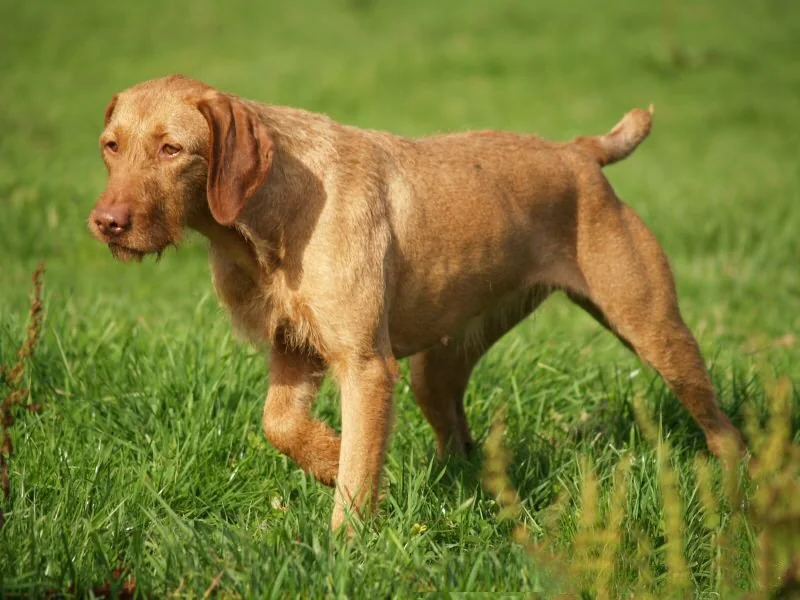
The Wirehaired Vizsla is a russet-gold pointing dog with a rough, dense coat, protective undercoat and a visible beard. The FCI describes a more robust build than the short-haired Vizsla. It has its own standard, number 239; it is not simply the same breed with a different haircut.
Read the official FCI standard. A breed standard describes the desired type; it does not promise the behaviour or health of an individual dog.
Character and temperament
The FCI emphasises adaptability and an approachable nature alongside working traits. A breed description remains a starting point: confidence, energy and social responses also vary with ancestry, upbringing and experiences.
Teach household routines clearly and patiently. Practise recall, calm greetings, comfortable handling and relaxing when people are occupied. Let new experiences happen at a manageable pace. Give the dog enjoyable tasks to do with you while teaching that a quiet afternoon is simply part of life. That balance makes a versatile working dog a pleasant partner at home too.
Breed reference: FCI standard for Wirehaired Vizsla.
Coat care and everyday grooming
A wire coat calls for advice suited to its hair structure. Before experimenting, ask a breeder or experienced groomer to demonstrate the right approach. Discuss brushing, removing loose hair and any specialist care. Keep the beard and area around the mouth clean and comfortable.
After walking through vegetation, inspect feet, ears and areas where the harness or collar touches the skin. Start nail and dental care early and keep sessions short and enjoyable. Dry the dog after wet activity and watch for skin irritation. Good care supports both comfort and the characteristic appearance.
Exercise and activities
A varied day includes walking, investigating scents and shared games. The hunting past offers inspiration: finding a hidden object or retrieving a suitable toy gives activity a purpose. Choose safe conditions for running and water and build new exertion gradually. A rough coat does not automatically make every weather condition comfortable. Pay attention to age, fitness and individual responses, then provide a genuine opportunity to rest.
Training and learning
Reward the behaviour you want to see again. Practise one useful skill at a time: coming when called, walking comfortably on a lead, settling and accepting gentle handling. Start where your dog can succeed, keep lessons brief and add distractions gradually. Use the breed’s original role as context, then adapt to your individual dog. Intelligence does not replace patient teaching.
Training approach: Dogs Trust: positive reinforcement and rewards.
Health and responsible ownership
Ask the breed club for current screening recommendations and inspect documented parental results. Discuss family history and the meaning of tests with a veterinarian. Track weight and watch for changes in stamina and movement, particularly during growth and ageing. Do not use a working past as a health guarantee. A breeder who answers specific questions and explains uncertainties helps you make a better-informed choice.
Family life and suitability
The Wirehaired Vizsla may appeal to people who enjoy outdoor activities and a close training relationship and want to maintain a specialist coat. Meet adults and compare real household routines with your own schedule. Who manages muddy walks, grooming and daily guidance when life gets busy? If those commitments fit, this distinctive breed offers an interesting combination of practical hunting heritage and companionship.
Choosing and raising a puppy
Before choosing a Wirehaired Vizsla puppy, meet adult dogs and ask how the parents live day to day. Request the actual health-screening documents recommended by your country’s breed club. Discuss family history and what support the breeder provides after the puppy comes home. Plan company, supervision, grooming and a quiet resting place before arrival.
Introduce people, ordinary sounds and gentle handling in small, pleasant steps. Give the puppy room to retreat and stop an interaction when it becomes worried or overwhelmed. Ask your veterinarian which outings are suitable around the vaccination programme. Adapt exercise to the growing dog rather than copying an adult’s routine; there is no single exercise prescription that suits every puppy.
Further guidance: Dogs Trust: puppy socialisation.
Compare related breeds
Wirehaired versus short-haired Vizsla begins with two separate standards and different coat structures. The beard comes with grooming considerations. Compare adults and ask about life away from the field, rather than assuming coat alone determines which breed will fit.
Frequently asked questions
Is a Wirehaired Vizsla a good family dog?
Consider the individual dog, its daily needs and your household routine. Meet adults, discuss children and other animals with experienced owners, supervise interactions and provide a resting place where the dog is undisturbed.
How much exercise does this breed need?
Combine suitable movement, sniffing, short lessons and rest. Age, fitness, weather and health change what is appropriate. The exercise section above offers activities; a veterinarian can help adapt the plan for a growing, older or unwell dog.
What should I ask a breeder?
Ask to meet the dogs, inspect the relevant parental health-screening documents and discuss temperament, daily care, puppy experiences and ongoing support. A test result reduces uncertainty about a particular issue; it cannot guarantee lifelong health.
Which coat routine should I follow?
A wire coat calls for advice suited to its hair structure. Before experimenting, ask a breeder or experienced groomer to demonstrate the right approach. Discuss brushing, removing loose hair and any specialist care. Keep the beard and area around the mouth clean and comfortable.
Where can I share photos and ask other owners?
Visit the community through the link below. Owner experiences can be helpful context, but they do not replace a veterinarian’s assessment of a health concern.
Sources and editorial notes
This English edition combines the existing English breed stories with additional appearance, puppy, comparison and FAQ sections. Breed standards describe typical breed traits. Practical guidance should be adapted to the individual dog; ask your national breed club for current screening recommendations.