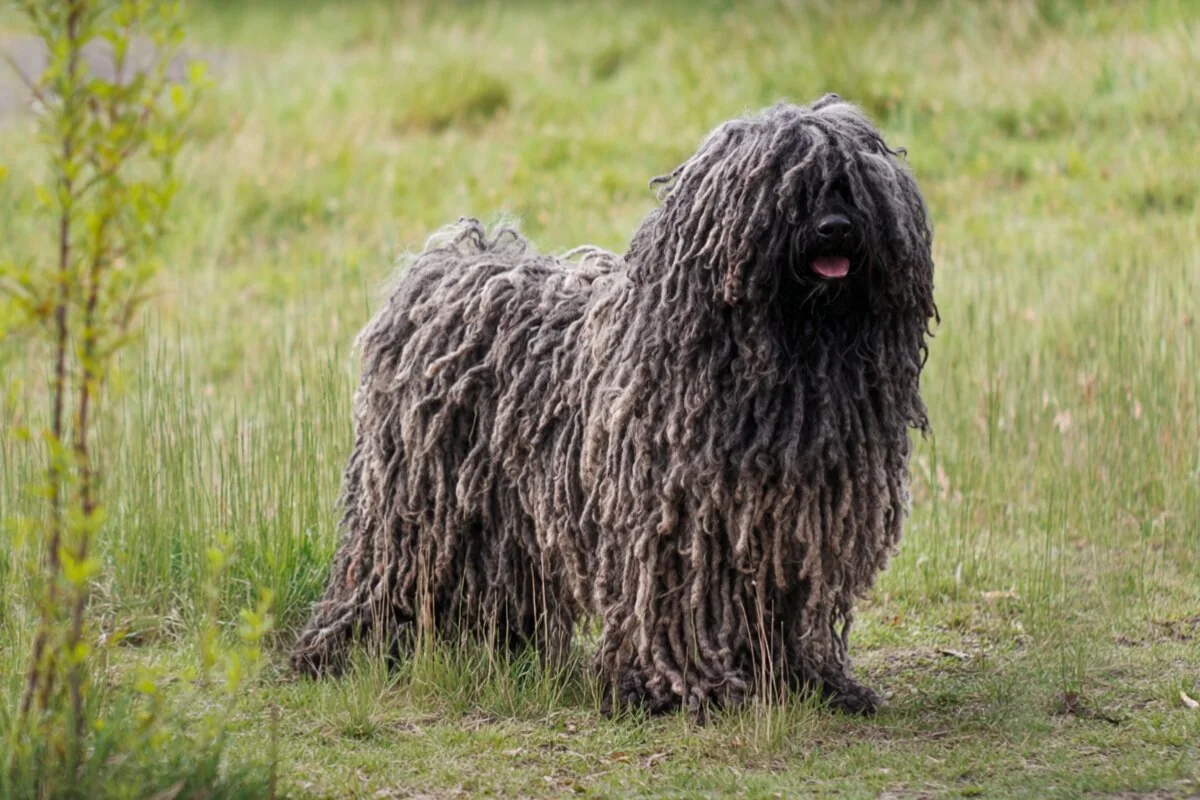
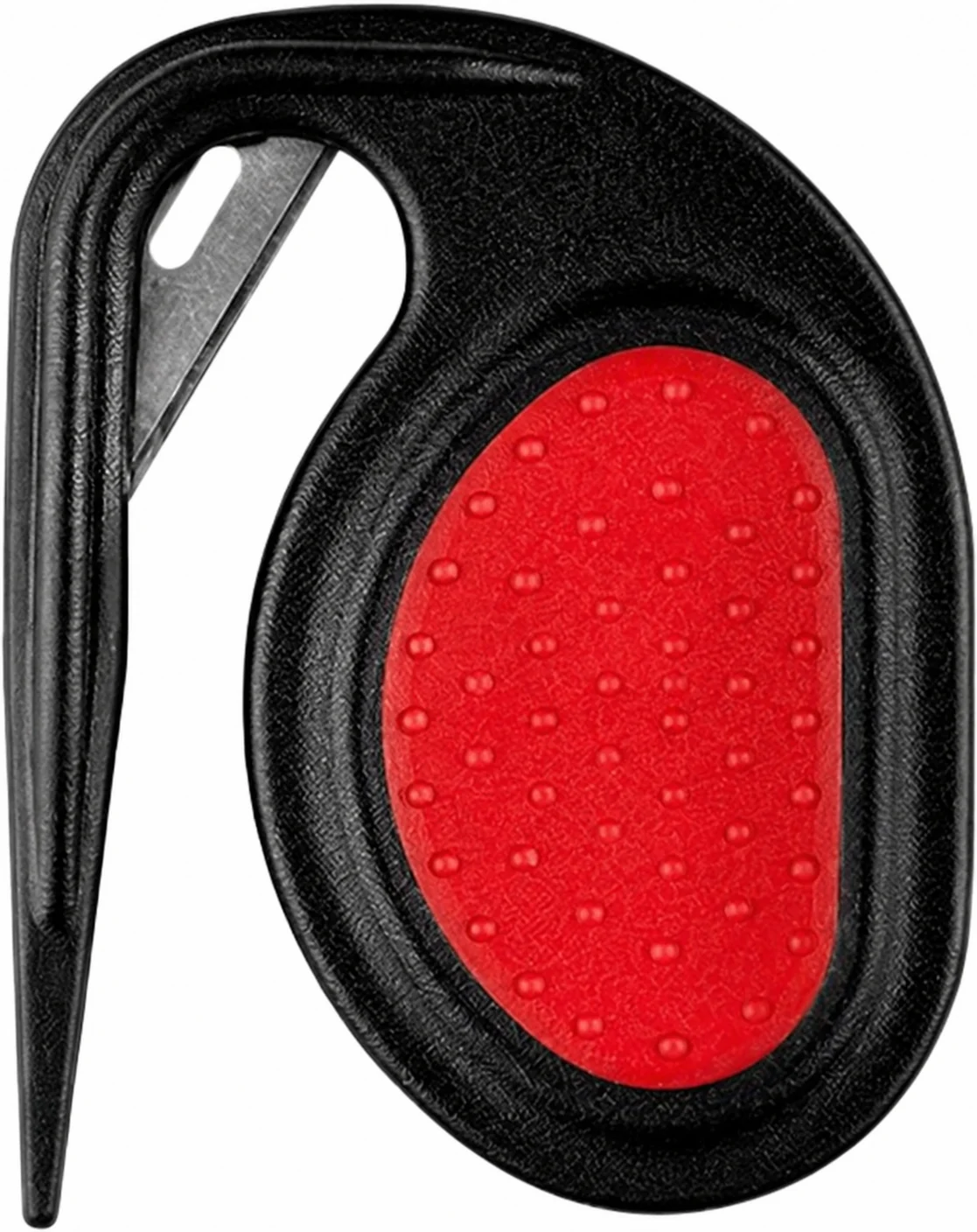
The hook knife that I show here
I'm showing an unbranded example here to make it clear which tool this story is about.
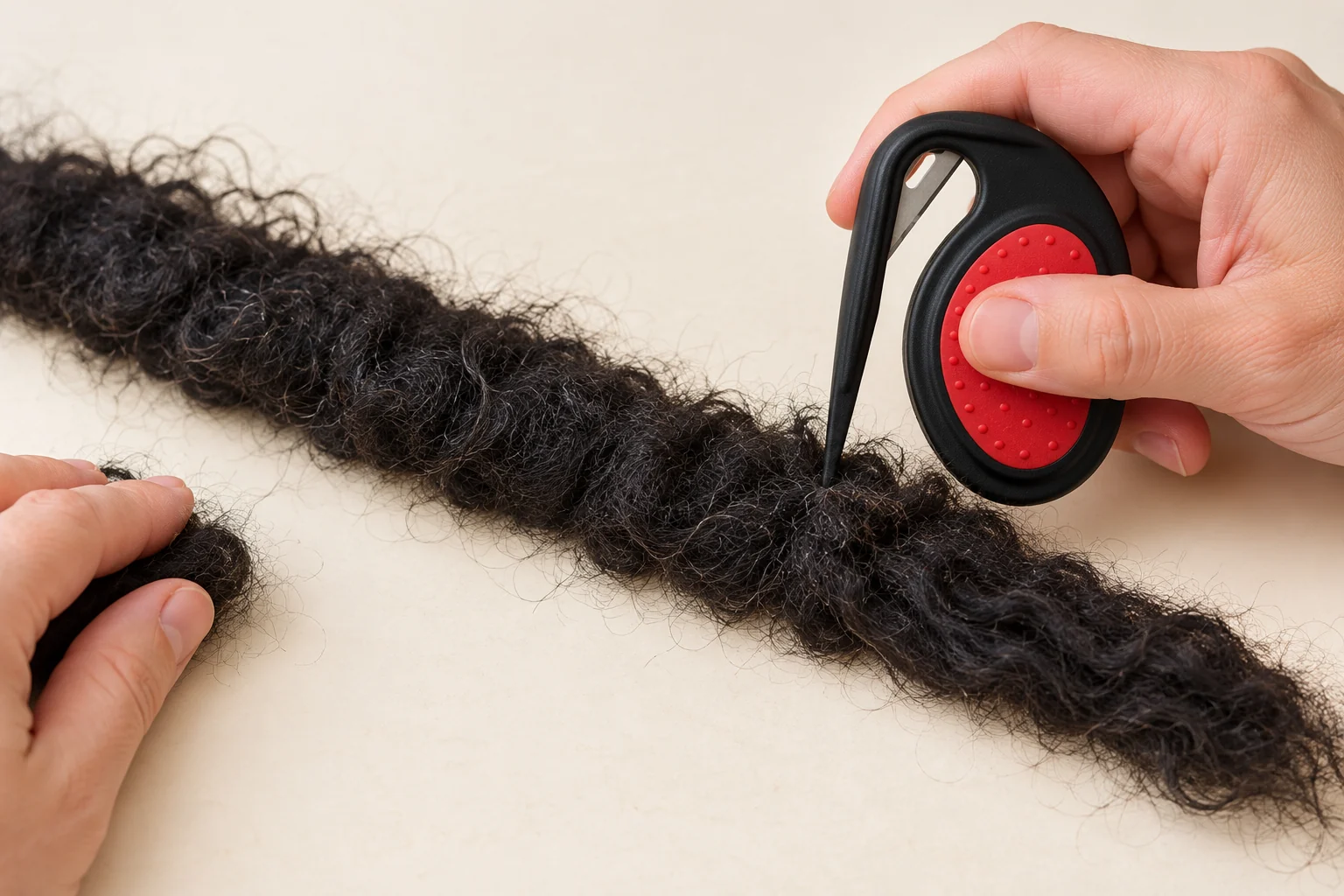
The unbranded image shows the type with black housing, red grip and one recessed blade near a narrow guide tip. This type cuts hairs in a tangle; it is not an ordinary comb. The manufacturer describes short movements without force and warns about loose or folded skin. A protected blade does not make the tool harmless. [2]
My starting point: a cord is not a tangle that needs to be removed
Anyone who only sees a photo of a Puli can easily mistake cords for tangles. I would first like to clarify that difference.
The characteristic cords arise from the combination of undercoat and outer coat. During maintenance, keep adjacent cords separated by hand so that they do not grow together into larger plates. You should not brush or comb out a Puli with a corded coat. [1] The thickness and structure differ per dog; Increasingly narrower can weaken cords. [5] The general step-by-step plan for a combable dog coat cannot therefore be applied directly to a Puli.
Detangling spray: what I want to explain with this example
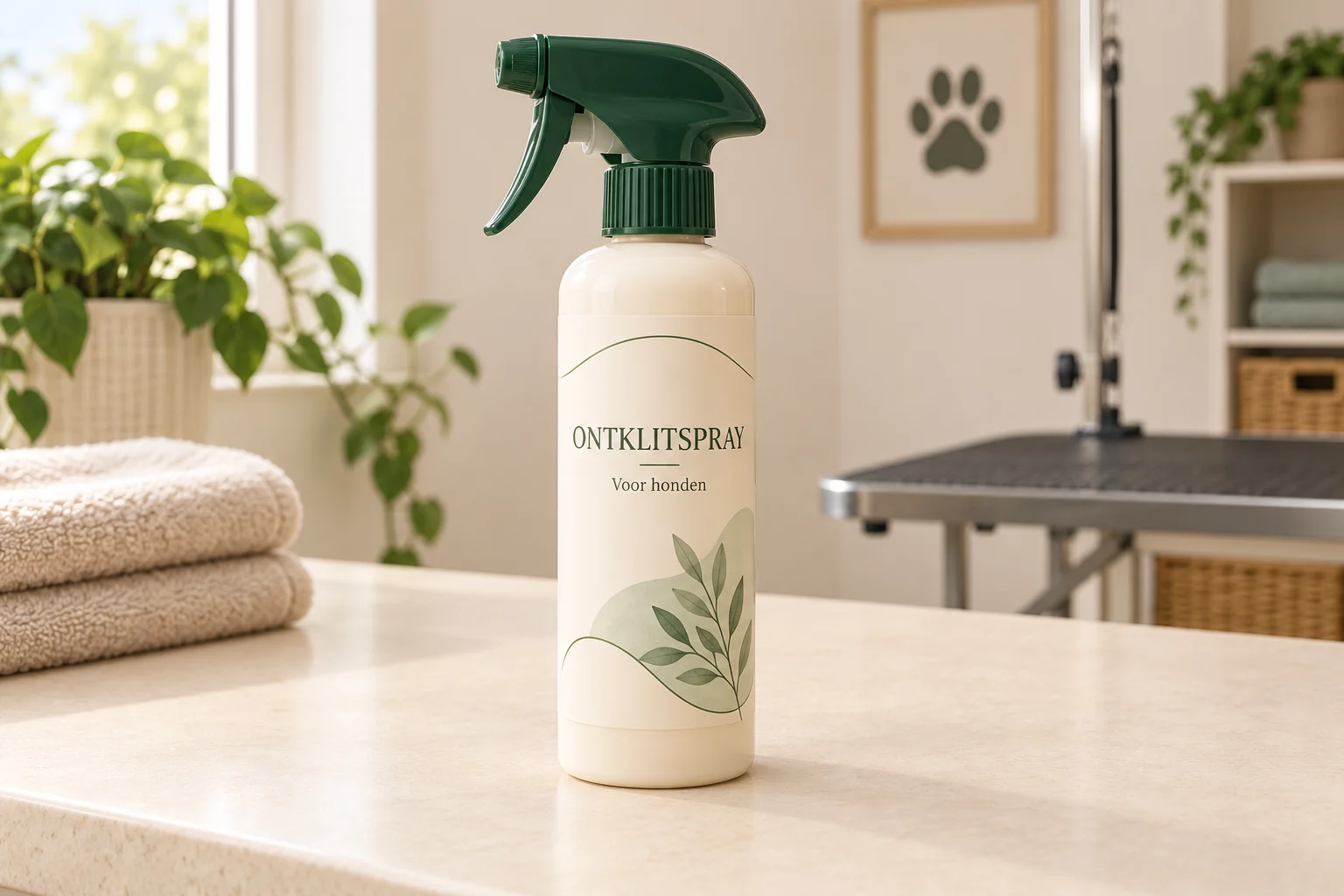
The bottle in this story is an illustration. I don't present that as a product that I tested on Marley.
Detangling spray often comes in a bottle with a pump sprayer. The AI photo shows an unbranded example, not a specifically purchased or tested product. Product information about detangling spray describes products that make hair more flexible and support combing. Distance of use, application time and rinsing differ per product: read the product's label. [3] That general product purpose does not prove that the spray is suitable for preserving Puli cords. Ask an experienced Puli groomer if a product suits your coat before adding it to the routine.
Start slowly: first look at the location
Before I discuss a technique, the dog itself is discussed.
Let your Puli sit or lie comfortably on a stable non-slip surface. Work in short sessions and reward quiet cooperation. Stop if there is any withdrawal or tension. [4] Then check whether it concerns two cords that have joined together or a tightly matted area. Are you unable to assess the skin, or does the area appear painful, red or damaged? Then have a groomer or vet take a look first. Do not pull the skin up with the coat you are holding to make room for a blade. [2]
Keeping cords separate: the fingers as a starting point
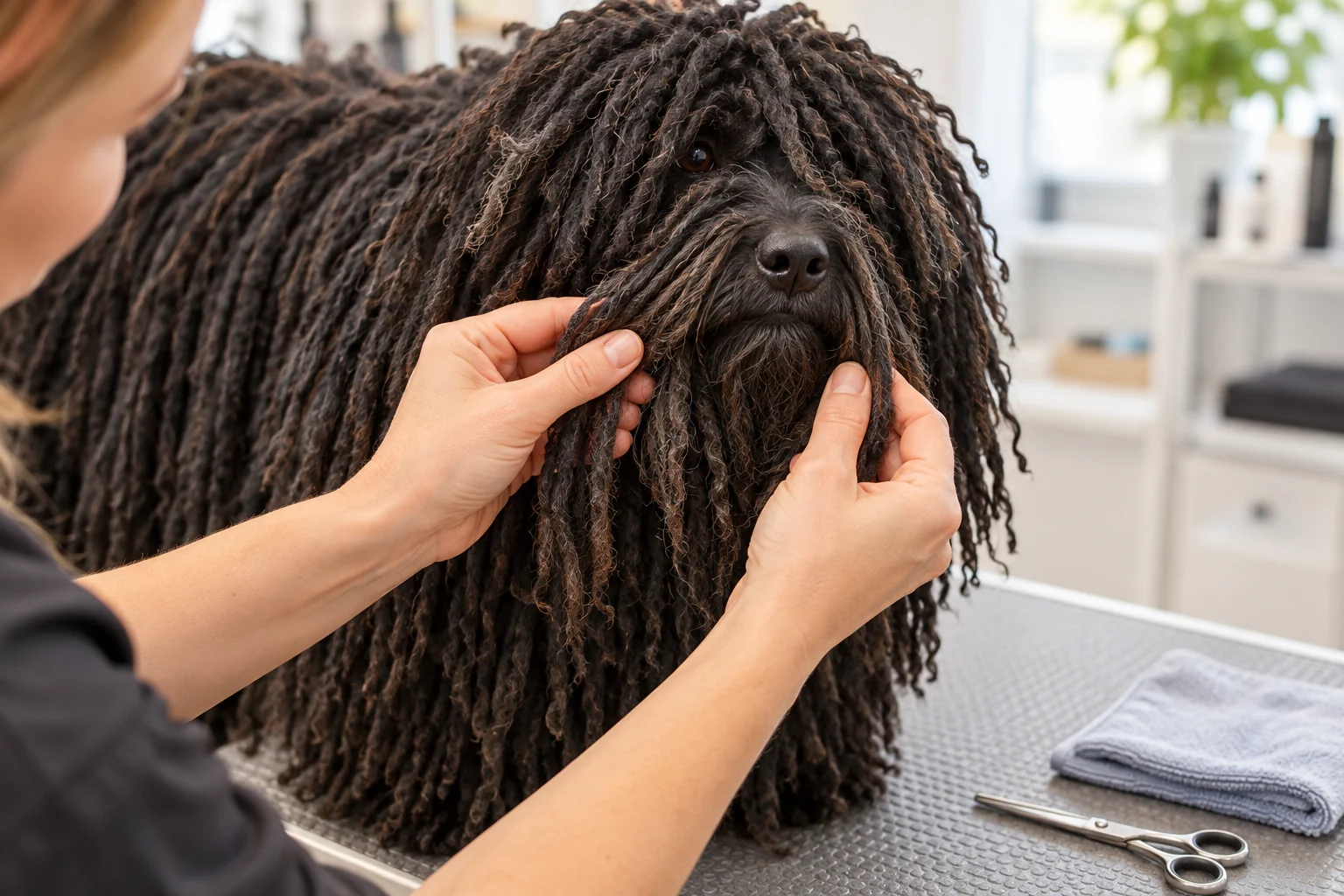
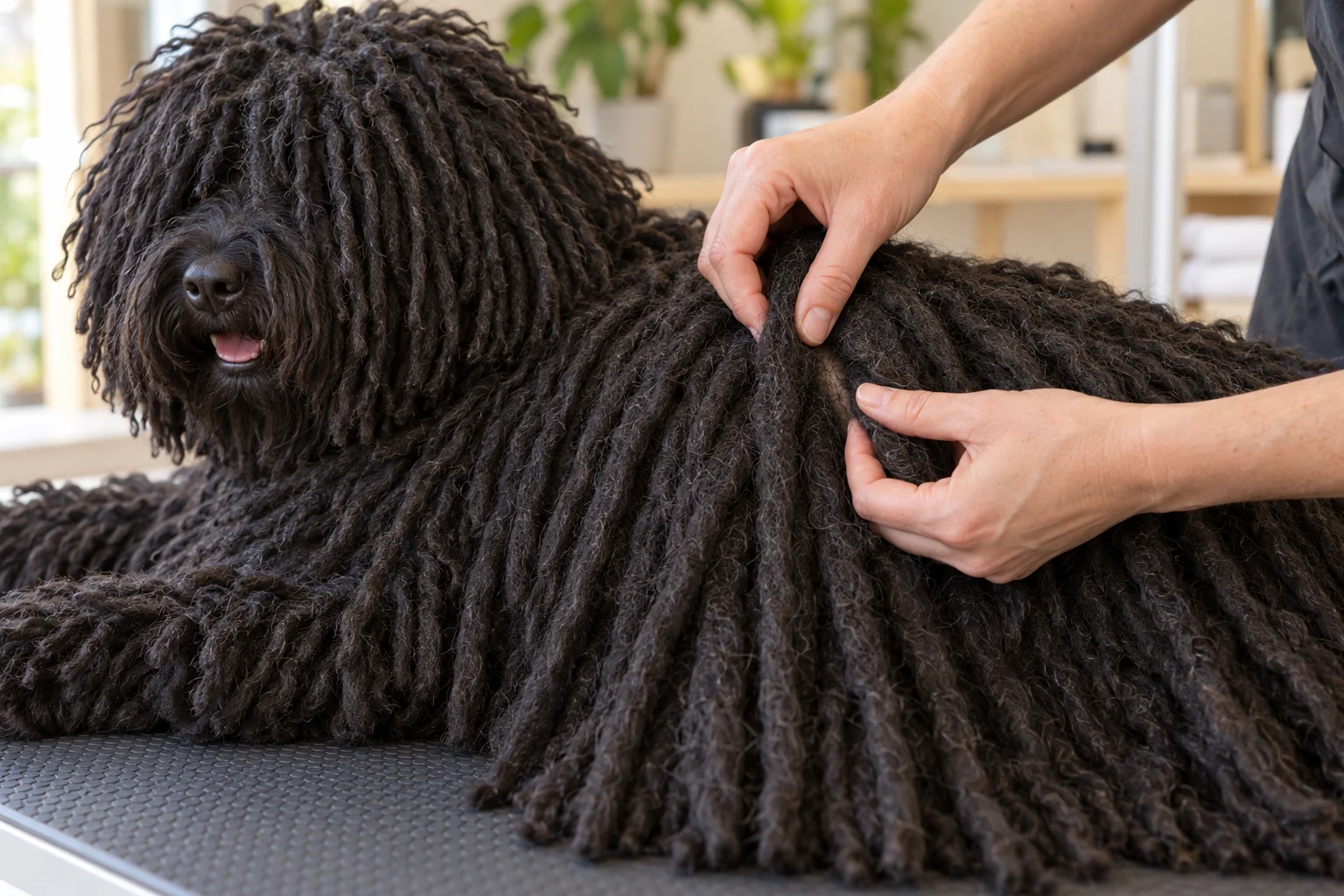
My explanation focuses on keeping the cords loose from each other, not on combing out the coat.
Ask someone experienced in Puli coat care to demonstrate the technique on your dog first. Find the natural separation between two cords. Support the coat at the base and work your fingers along that parting in small sections, without pulling the skin along. The cords themselves remain intact; you separate them from each other. [1][5] The photo illustrates this quiet maintenance. If the cords will not separate without force, stop. A tightly matted area is not a place to practise using a new blade.
A hook knife: first understand, then have it demonstrated expertly
For me, a photo of a blade is not complete instructions for use. That is why this also includes the limit of home care.
Let the groomer determine whether cutting is necessary in this specific coat and demonstrate how your model is handled. The product manual recommends professional help for tangles larger than a pea and mentions additional risk with loose skin. [2] The AI image only shows the principle on a loose test strand on the table: a knife can divide hairs lengthwise. It does not show a safe cutting angle on a dog. At home, do not insert the point blindly between the skin and felt and do not cut up healthy cords with a knife.
What matters to me: comfort and preservation of the cords
Most of all, I want to help you understand what you want to keep: loose cords and a comfortable dog.
After the gentle handiwork, check whether the cords hang separately and the skin looks comfortable. Do not brush out the cords afterwards. [1] Keep up with maintenance and have areas that grow together assessed in a timely manner; the British breed association emphasizes that delaying attention to matted areas makes the problem worse. [5] PDSA recommends having stuck tangles treated by a professional. [4] The vet will help with skin complaints; In the event of a coat problem without skin complaints, an experienced Puli groomer can determine the appropriate approach.
This way you make it clear
- 01
Let your Puli sit or lie quietly and stably. Reward cooperation and take breaks.
- 02
Assess skin and cord base. Have painful, unclear or tightly felted areas treated.
- 03
Gently hold two adjacent cords apart using the finger technique taught. Leave healthy cords intact.
- 04
Only use spray if the product label and advice from the Puli groomer suit your coat.
- 05
Let the groomer decide on a tangle splitter. The test pluck photo is not an instruction for cutting near the skin.
- 06
Check comfort and loose separations, reward your dog and schedule the next short check. Do not comb the cords.
You may be wondering…
Is a hook knife always safe due to the protected cutting edge?
No. It has a sharp blade in it. The manufacturer warns of injury due to incorrect use and loose skin. [2]
Can I cut large felt sheets into strips myself?
Have this assessed by an experienced groomer. The product manual refers to professional help for tangles larger than a pea. [2] PDSA does not recommend treating stuck tangles at home. [4]
Do I have to comb out a Puli after detangling?
Do not comb or brush a Puli that is held in cords. You maintain the separations between the cords. [1] A consciously brushed coat requires a different routine.
Does detangling spray work painlessly on every tangle?
You cannot guarantee that. Spray does not automatically make a tightly matted patch safe to treat. Follow the product label and if in doubt, have the coat assessed. [3][4]
Are the images real instructional photos?
The image of the hook knife has been made unbranded with AI based on the supplied product photo. The spray, the Puli with hands and the loose test tuft are AI illustrations. They clarify the explanation and do not replace a personal demonstration.
The sources for my story
- Puli Canada · Puli Coat ↗
- Product manual tangle splitter · use and warnings
- Product information detangling spray · operation and use
- PDSA · Grooming pets ↗
- Hungarian Puli Club of Great Britain · Puli Coat Care ↗
I write from my experience with Marley. The general care information above has been supplemented with these sources. The illustrations do not document a grooming procedure performed on Marley. If your dog has symptoms, seek advice specific to your dog.