What comes first for me: a comfortable Puli
For me, this story is not about a perfect haircut. It is about being able to eat, exercise and be cared for comfortably.
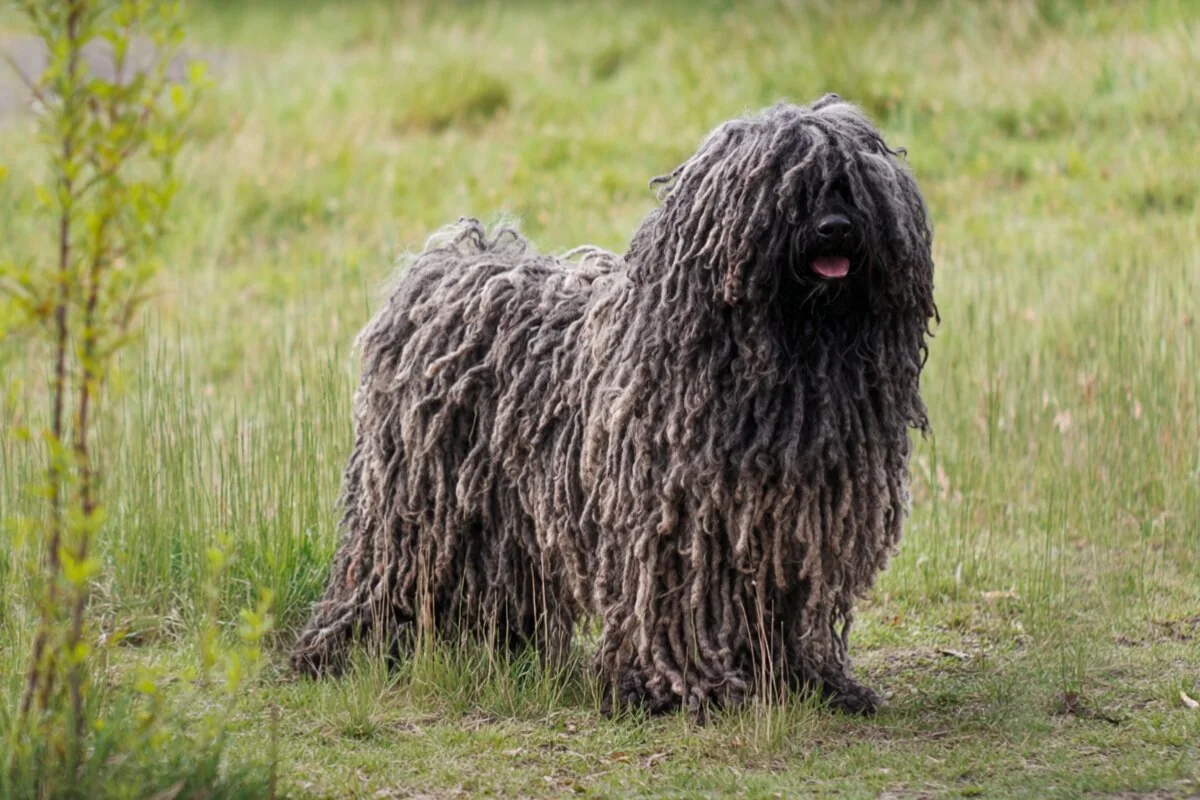
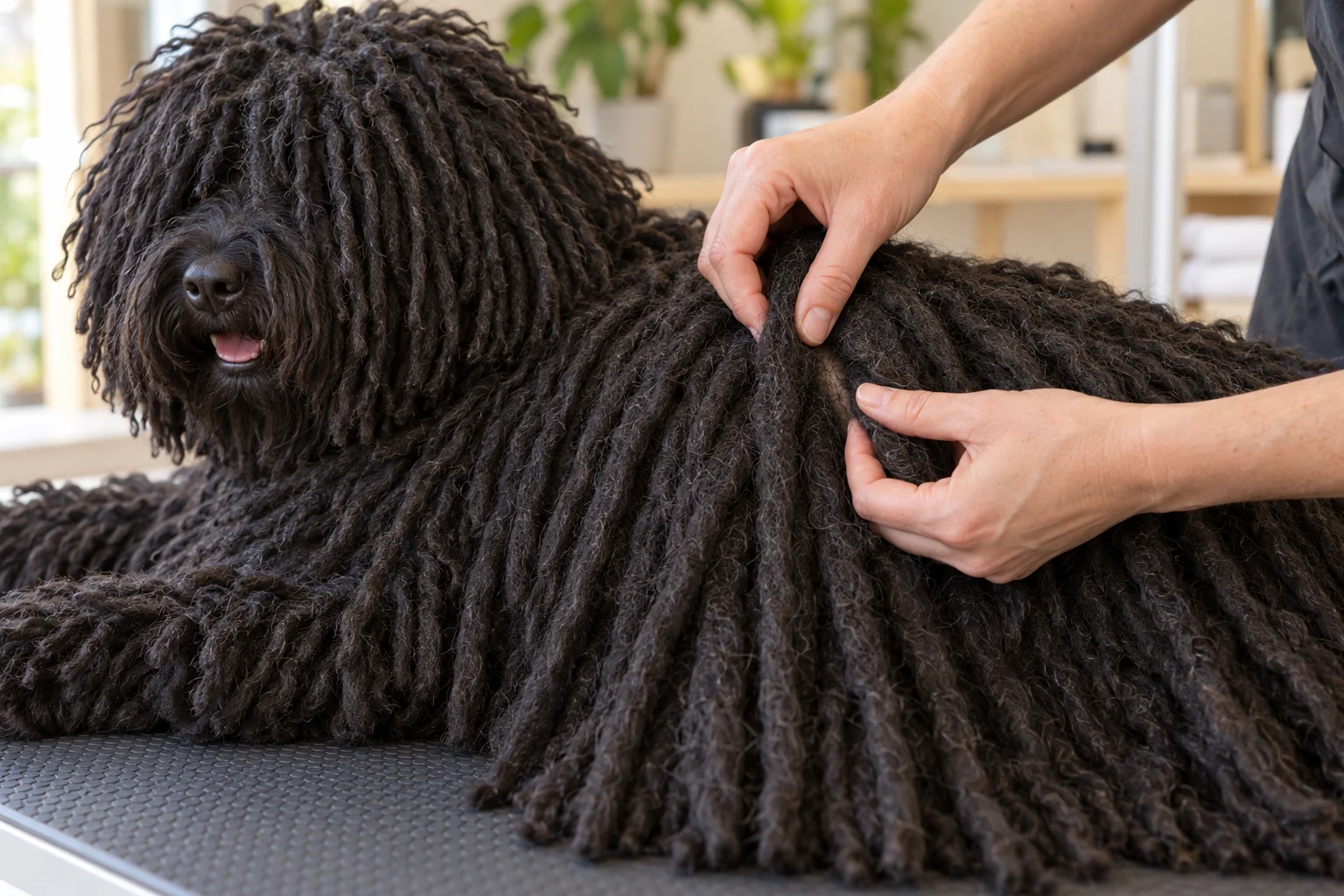
With a Puli, local trimming is mainly about comfort: no hair between the lips, less dirt under the tail and being able to inspect around the ears. The Hungária Puli Klub describes shortening mouth hairs and keeping hair short around the anus and genitals. [1] The British breed association mentions careful trimming under the tail and regular rinsing of the beard and hindquarters. [2] That is no reason to cut off the entire corded coat. Let an experienced Puli groomer determine which cords need to be shorter and how to keep the rest. The correct length varies per dog; there is no universal centimeter measurement for these three zones.
My first point of attention: peace and good visibility
Before I talk about cutting, I want to talk about the preparation.
Start without scissors. Allow your dog to stand or lie on a stable, non-slip surface in a manner that he likes. Practice briefly touching the cheek, outer ear and hindquarters, reward quiet participation and take breaks. Build up the touching gradually. [3][7] Provide good light, clean hands, a soft cloth and a towel. Ask a Puli groomer to demonstrate suitable materials and the actions on your dog. Blue Cross recommends breed-specific instruction and suitable scissors with rounded points for sensitive areas. [4] Such scissors can also damage skin. Don't cut if you're not sure what's hair and what's skin, or if your dog moves his head or body suddenly.
Mouth and beard: keeping it clean comes first
I start my explanation with cleaning the mouth, not with the scissors.
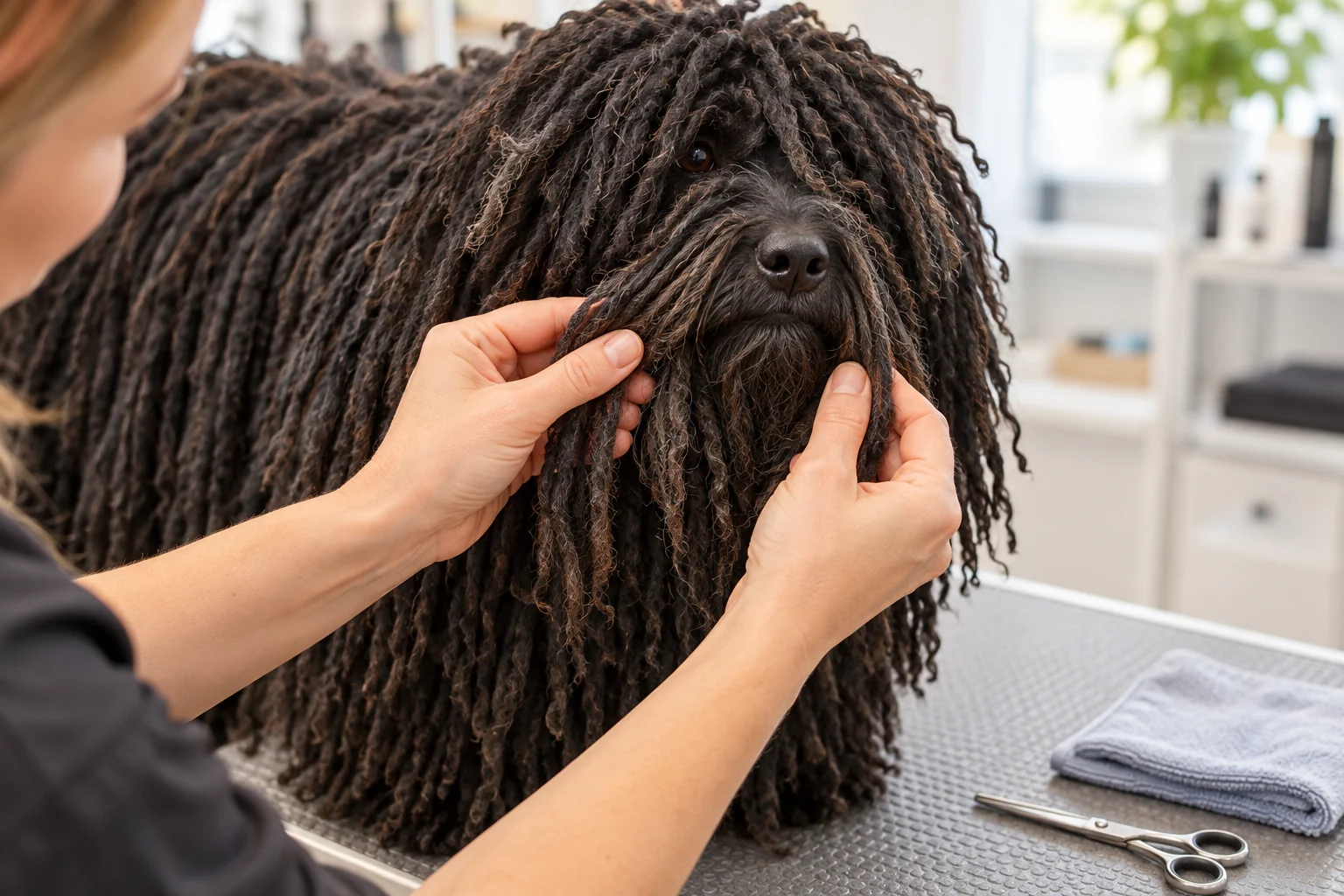
See if loose ends of hair get stuck between closed lips or keep catching food. Clean the beard with a soft cloth and lukewarm water and pat dry. For the face and mouth, Blue Cross recommends clean water instead of shampoo around these openings. [4] First have a Puli groomer show you how to hold the mouth hairs aside and leave the lip edge free. [1] A gentle maintenance rule afterward: only work on obviously loose ends that are kept well away from the skin; take away very little at a time. Keep the scissors away from eyes, nose and lips and never cut between open lips. If a strand remains stuck to the skin, if you cannot see the skin or if your dog is moving, stop. It is wiser to first soak and clean a caked-on beard than to cut into a lump where you cannot see the skin clearly.
Under the tail: attention to a sensitive spot
The cords under a curled Puli tail deserve their own explanation.
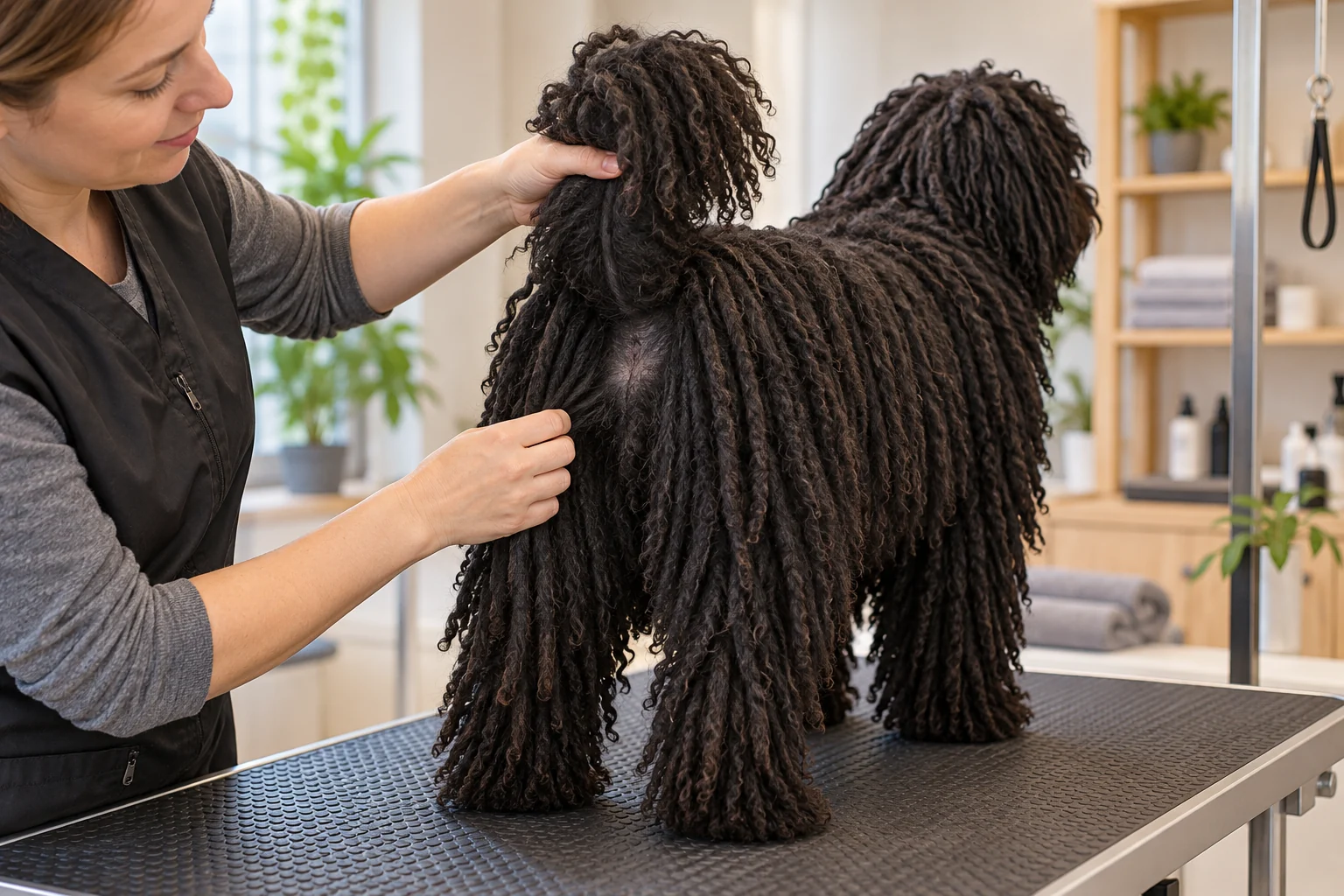
After walking, check whether stool remains stuck on the cords. Gently wet only the soiled part with lukewarm water, let stuck-on dirt soften, rinse it away and pat dry thoroughly. Do not pull off a dried clump of dirt. The Puli breed clubs describe locally keeping them shorter under the tail to make hygiene easier. [1][2] Have this delicate cutting job done the first time by a Puli groomer: he or she will hold the cords aside, check where the skin is and only trim the hair that is in the way. The anus, skin folds and genitals remain outside the cutting area. Do not force the curled tail up. At home you can keep it clean and check the agreed hair ends; don't search under a stuck tangle with scissors.
Ears: why I discuss the outside and ear canal separately
In a grooming story, ear hair and ear treatment are easy to confuse. That's why I make the difference clear.
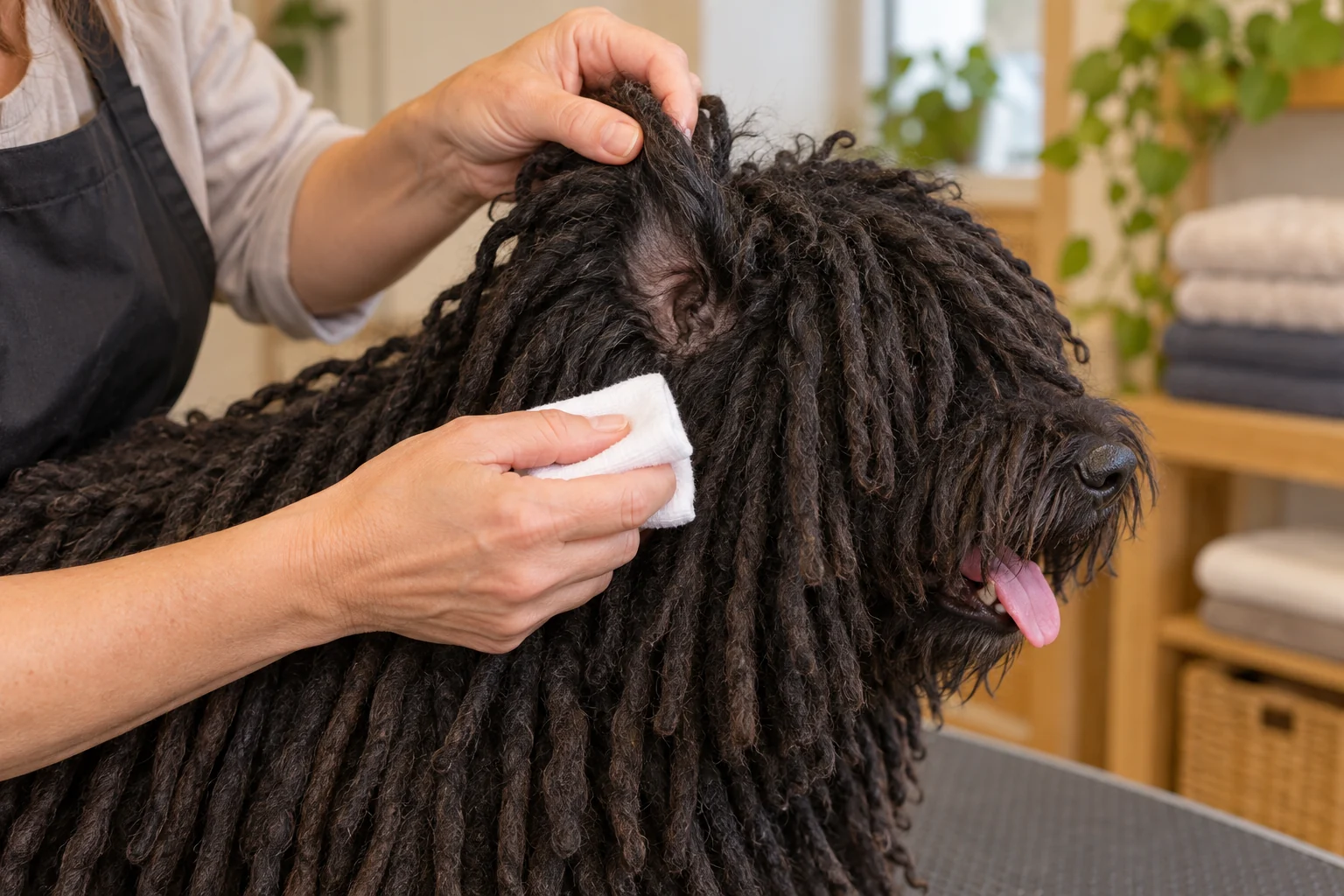
Only gently lift an ear and look at the outside and the visible entrance. Also look for cords behind the ear; tangles can occur there. LICG advises not to pull out hair that is still attached, as this can cause irritation and sometimes inflammation. [3] Never cut the ear canal or insert scissors, tweezers or cotton swabs. VCA warns that cotton swabs can damage the ear canal or eardrum and push dirt deeper. [5] A clean, healthy ear canal does not automatically require treatment. If there is a lot of ear hair, have the vet assess whether removal is necessary. Hair outside the ear that makes inspection difficult can be assessed by a groomer; cutting along the thin edge of the ear yourself is not a good first exercise.
When I refer you to an expert
My experience as an owner is no substitute for help with pain or damaged skin.
A hard tangle against the skin or on the ear flap is a different job than shortening loose cord ends. The British Puli Club recommends experienced help with felting, especially on the ears. [2] Stop if it hurts to touch, there is a wound, or the skin appears red and swollen. If your dog has smelly ears, noticeable discharge or pain, have your vet take a look before cleaning. Cleaning too often can even cause irritation. [5] Frequent scooting, licking the hindquarters, swelling, blood or pus are also reasons for veterinary advice. You can't solve that by cutting it shorter. [6] If grooming a dog with no signs of pain or skin disease is not possible because your dog is afraid, practice small steps and ask for help instead of holding him tightly.
Why I keep anal glands out of this care story
I want to prevent a hair touch-up story from being read like a medical manual.
Don't confuse hair care with expressing anal glands. Some older Puli care texts refer to this as routine, but VCA describes that the contents are released normally during defecation. [6] In case of complaints, the vet determines what is necessary; repeated treatment may be advised in certain dogs. Do not express the glands as a preventive home routine simply because you are grooming that area. A hygiene cut is about hair on the outside. Medical complaints, pain and discharge require a different assessment. For ear hair, this guide also follows the cautious LICG line and an individual veterinary assessment, not automatically the plucking instructions from older breed guides. [3]
My points of attention between grooming sessions
I conclude with a few points of interest that you can discuss with your own groomer.
A possible routine: check at feeding and walking times whether the beard and the cords under the tail are clean. Only clean dirty parts and let them dry thoroughly. During a quiet grooming moment, check whether you can view the outer ears and whether the cords behind the ears remain loose. Take a photo before and after a professional hygiene cut to remember the intended length. Agree with the groomer which visible ends you can maintain yourself and when you will return. Do not use a fixed weekly schedule if your dog is more likely to get dirt or tangles. A short, relaxed check is more useful than continuing for a long time until your dog no longer wants to cooperate.
This way you make it clear
- 01
First look: is it just long hair or is there dirt, a tangle, pain or a skin problem? In case of complaints, seek expert help first.
- 02
Mouth: clean the beard with lukewarm water and pat dry. Ask the groomer to demonstrate which loose ends outside the lip line can be shortened.
- 03
Anus: rinse contaminated cords locally. Have the small hygiene zone trimmed appropriately by a Puli groomer.
- 04
Ears: Check outer ear and cords behind. Do not cut the ear canal or pluck stuck ear hair yourself.
- 05
Limit any trimming you do yourself to the visible loose ends that the trimmer has indicated. Stop if there is movement or unclear vision.
- 06
Tidy up materials, give your dog some rest and write down what needs attention. If dirt, itching or pain recurs, discuss the cause.
You may be wondering…
Do I have to cut a Puli short everywhere?
No. Local hygiene and the choice of a completely short haircut are different things. Discuss with a Puli groomer how to combine comfort and the desired coat.
How many centimeters should remain around the mouth or anus?
There is no size that is safe or necessary for every Puli. Skin, coat, soiling and the dog’s movement determine the approach. Ask a groomer to demonstrate the appropriate length on your dog.
Can I just pluck out ear hair?
Don't do that as a general home routine. LICG does not recommend pulling out stuck hair. If hair obstructs your dog’s ear-canal entrance, have a veterinarian assess what is necessary. [3]
Do the anal glands need to be emptied every grooming session?
Not automatically. Normally the contents are released during stool. The vet can recommend an individual treatment plan for recurring problems. [6]
Can I use the images as an exact cutting card?
No. The three images are recognisably labeled AI illustrations of the grooming areas. They do not show a safe millimeter limit or anatomical cross-section. A demonstration on your own dog remains necessary.
The sources for my story
- Hungária Puli Klub · Grooming and Care ↗
- Hungarian Puli Club of Great Britain · Puli Coat Care ↗
- LICG · Coat care for dogs ↗
- Blue Cross · How to groom your dog ↗
- VCA Animal Hospitals · Ear Cleaning in Dogs ↗
- VCA Animal Hospitals · Anal Sac Disease in Dogs ↗
- AVSAB · Humane Dog Training Position Statement ↗
I write from my experience with Marley. The general care information above has been supplemented with these sources. The illustrations do not document a grooming procedure performed on Marley. If your dog has symptoms, seek advice specific to your dog.