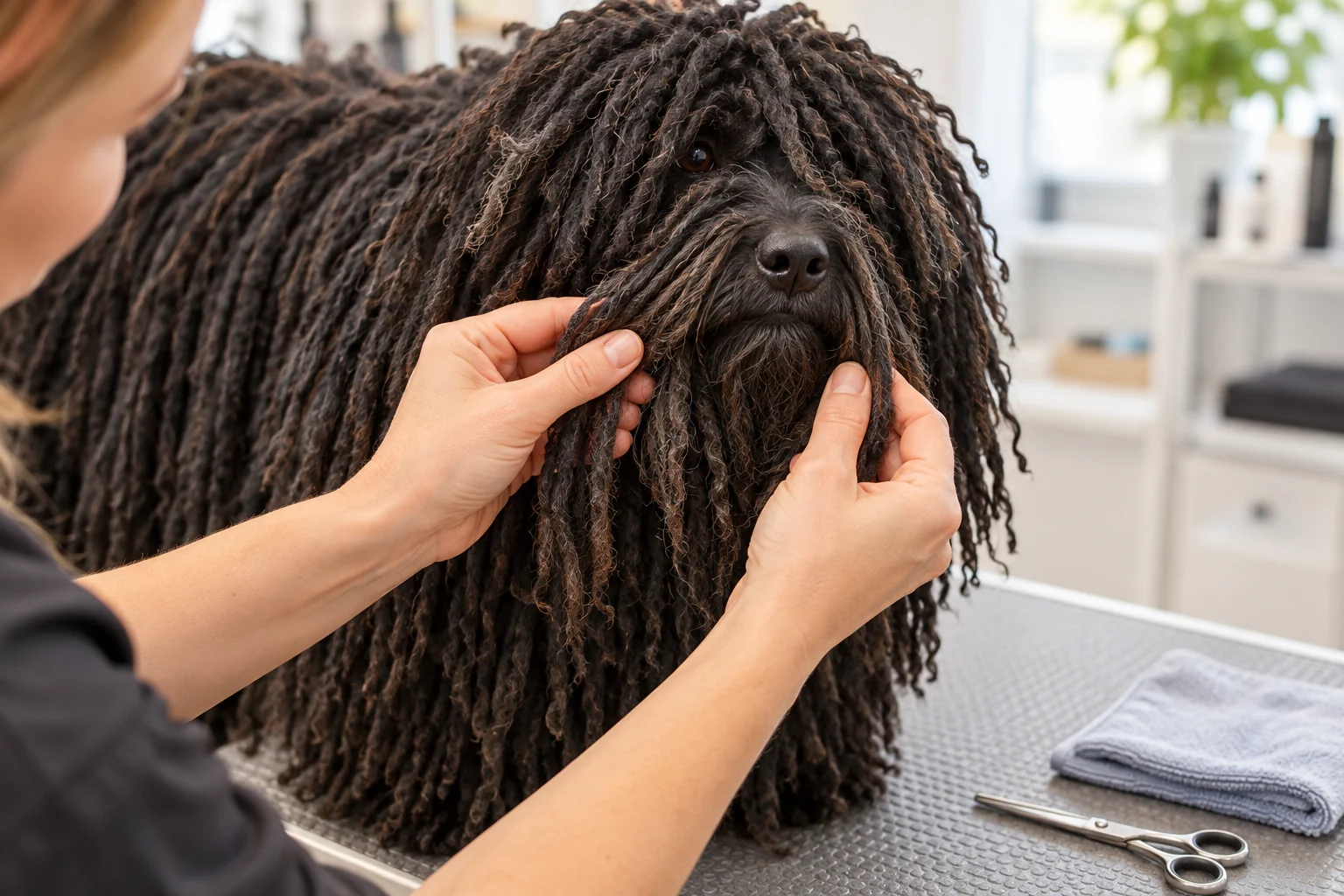
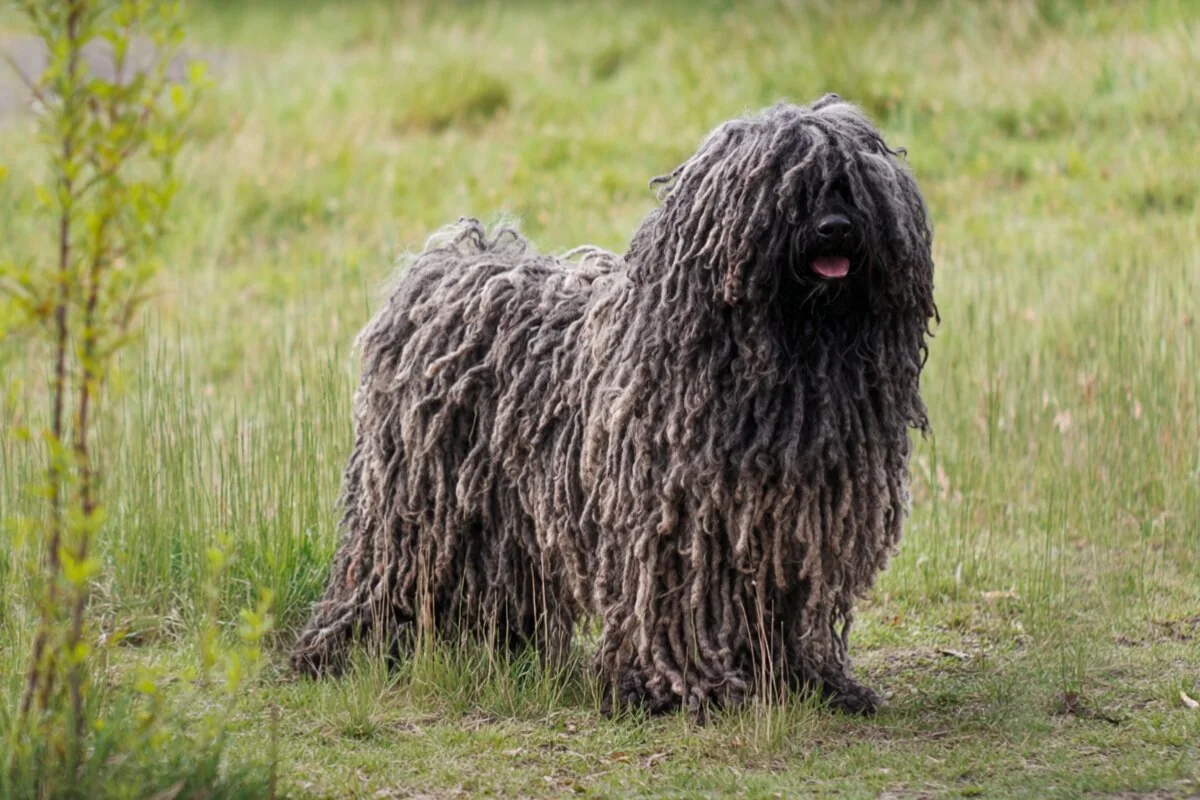
The Puli: Marley's coat type
I'll start with the breed I live with: the Puli.
The FCI describes a dense, wavy or curly puppy coat that later develops tufts and cords. The outer and undercoat together contribute to the final structure. A young Puli does not have to look like an adult dog. [1]
The Pumi: why I don't call curls cords
For the Pumi I base this comparison on the breed standard; my personal experience with Marley is Puli experience.
The Pumi standard describes a wavy, curly coat that forms tufts and is not corded. [2] Care advice for Puli cords cannot therefore simply be applied to a Pumi.
The Komondor: also cords, but with its own story
With the Komondor I also use the breed standard. The agreement with Puli cords does not tell the whole story.
In the Komondor, the FCI describes a long coat with coarser guard hair and finer undercoat structure, including cord formation. [3] The daily approach depends on the development and condition of the coat. Ask an experienced breed specialist for a demonstration; do not force the tangle or cord if there is pain or irritated skin.
This way you make it clear
- 01
First determine the breed, age and current coat stage.
- 02
Have an experienced breed specialist show you what you can control at home.
- 03
Follow the existing washing and cord guides that suit your dog.
- 04
If you experience pain, odor, skin problems or severe felting, ask for professional help.
You may be wondering…
Should a Pumi also have cords?
No. The FCI standard describes the Pumi coat as uncorded. [2]
Can an AI photo prove a grooming technique?
No. An image can illustrate an explanation; an appropriate demonstration and the written instructions remain the basis for care.
The sources for my story
I write from my experience with Marley. The general care information above has been supplemented with these sources. The illustrations do not document a grooming procedure performed on Marley. If your dog has symptoms, seek advice specific to your dog.