What I mean when I talk about wool grease
I use a recognizable word, but I want to clearly explain the difference with sheep's wool grease.
In explanations about the Puli you will come across the term wool grease for the natural fat layer on the coat. The German Puli Association uses this comparison for protection against water and dirt. [3] The precise name for the fat that a dog's skin produces is sebum. Sebaceous glands release it into the hair follicles. [1] Lanolin, the wool grease that you can buy as a product, is extracted from sheep's wool. [2] I therefore do not automatically equate the natural skin oils of the Puli with sheep lanolin.
Why I also pay attention to the skin under the cords
The striking cords attract attention. Yet I also want to include the skin underneath in this story.
The natural skin oil helps keep the skin supple and sufficiently hydrated. It also gives the hair shine. [1] You can see it as part of the daily protection that the body provides itself. So it is more than just a layer against the rain: it also supports the condition of the skin under the cords.
The natural raincoat of a Puli
The comparison with a raincoat makes the function of the fat layer understandable to me.
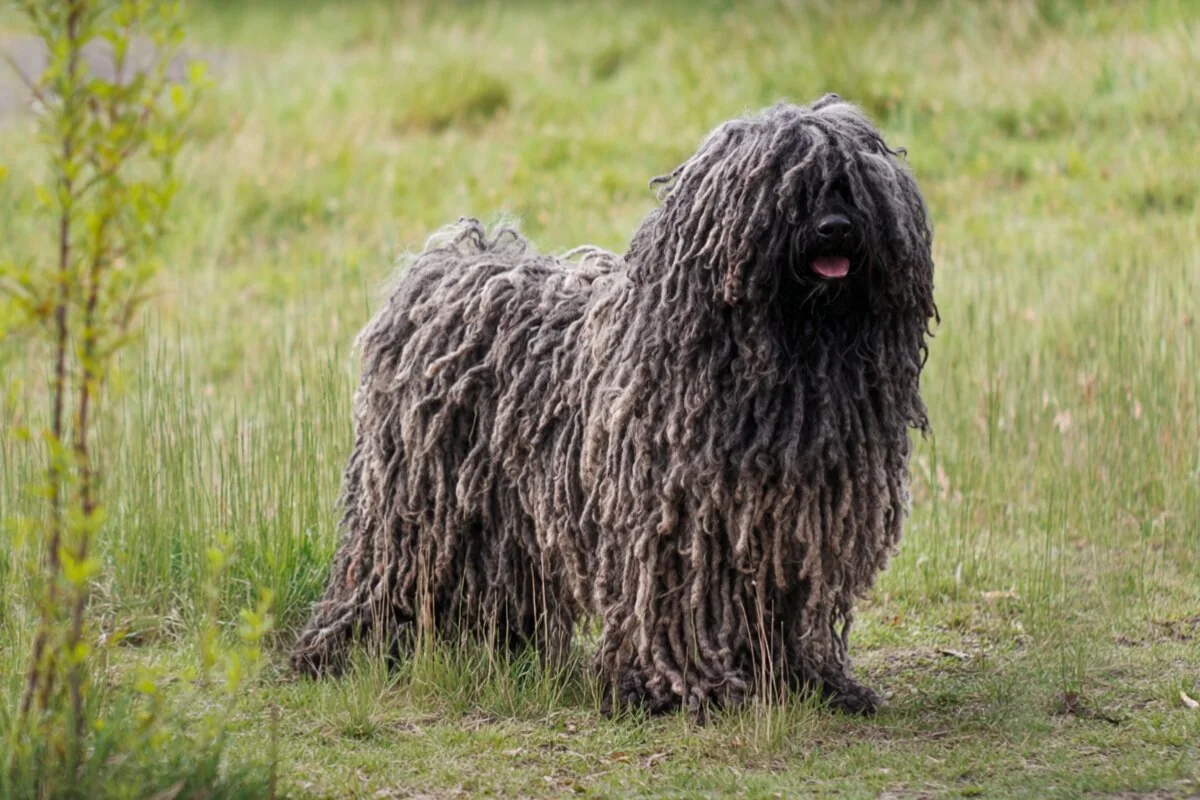
The German Puli Association describes that the natural fat layer helps protect against water and dirt. [3] During a light rain shower, droplets can remain on the outside of the cords and run off, while the skin remains dry. The structure of the cords also plays a role. [4] The fat layer and the coat work together like a natural raincoat. This does not mean that a Puli never gets wet or dirty, but it does mean that a light shower does not necessarily have to completely soak the coat.
What sources say about natural defenses
For this biological explanation I rely on veterinary information, not on Marley's own measurements.
Sebum also has antimicrobial properties. This means that it contributes to the natural protection against micro-organisms. [1] It is one part of skin protection; it does not prevent every infection and does not replace treatment when necessary. There is also no reason to assume that an increasingly greasy coat provides better protection.
Water-repellent does not mean that a Puli stays dry
With this story I do not want to give an image of a dog that can never get wet.
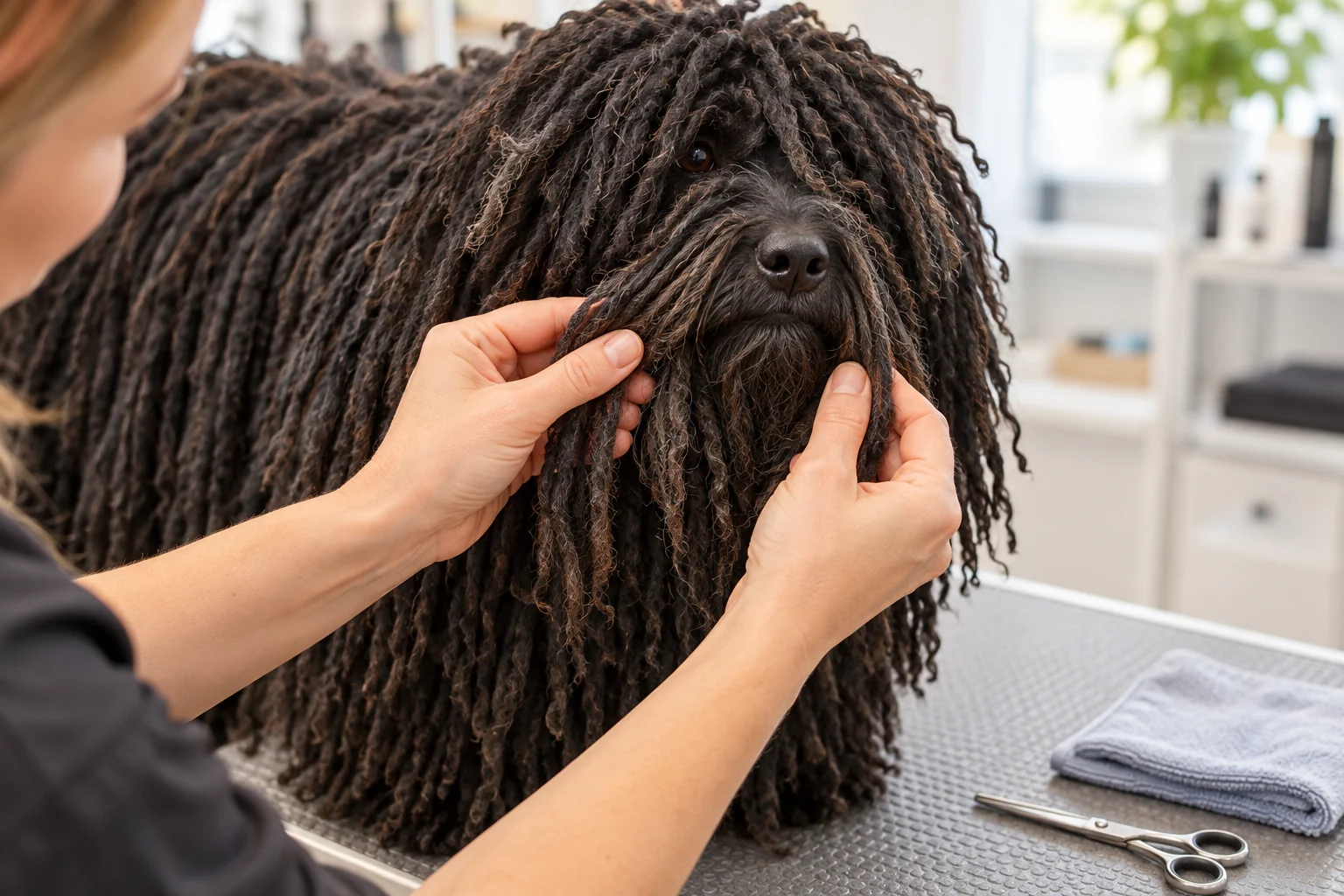
If a Puli gets wet long enough or goes swimming, the cords can still fill with water. How quickly water penetrates depends, among other things, on the coat structure. Once soaked cords need time and attention to dry. [4] After a wet walk, gently squeeze moisture from the cords with a towel. Also check thicker parts and the base of the cords. Have an experienced Puli groomer show you how to dry the coat safely and completely.
Care with attention to the natural fat layer
I like to connect this explanation with the story about washing and drying.
Adjust washing to the skin, coat type and soiling. If a bath is necessary, use an appropriate dog product and rinse thoroughly. [5] Natural skin oils are produced by the skin itself; the German Puli Association describes that the protective fat layer rebuilds after washing. [3] Applying extra wool grease to the cords does not follow. Discuss additional care products with an experienced Puli groomer. For a prescribed skin treatment, follow the vet's advice.
This way you make it clear
- 01
After walking outside, check how much moisture and dirt is actually in the cords.
- 02
Gently squeeze out excess moisture with a clean towel. Avoid rubbing hard. [4]
- 03
Have a Puli groomer demonstrate an appropriate method for complete drying.
- 04
When necessary, wash with a suitable dog product and rinse thoroughly. [5]
You may be wondering…
Is wool grease the same as tallow?
With a Puli, wool grease is used as a comparison for the natural fat layer. The precise name for a dog's skin oil is sebum. Lanolin as a product comes from sheep's wool. [1][2][3]
What is the natural skin oil good for?
It helps keep the skin supple and hydrated, adds shine to hair and has antimicrobial properties. With the Puli, the fat layer together with the cords contributes to protection against rain. [1][3][4]
Can a Puli get completely wet?
Yes. After prolonged wetting or swimming, the cords can still become saturated. The coat is water-repellent, not completely waterproof. [4]
Do I need to put extra wool grease on the cords?
This is not an obvious care step: the skin produces sebum itself. First discuss an additional product with an experienced Puli groomer or veterinarian.
The sources for my story
- Merck Veterinary Manual · The Integumentary System in Animals ↗
- PubChem · Lanolin (wool grease from sheep's wool) ↗
- Deutscher Puli Klub · Can I wash the Puli and if so, how often? ↗
- Deutscher Puli Klub · How long does the Puli take to dry? ↗
- VCA Animal Hospitals · Grooming and Coat Care for Your Dog ↗
I write from my experience with Marley. The general care information above has been supplemented with these sources. The illustrations do not document a grooming procedure performed on Marley. If your dog has symptoms, seek advice specific to your dog.