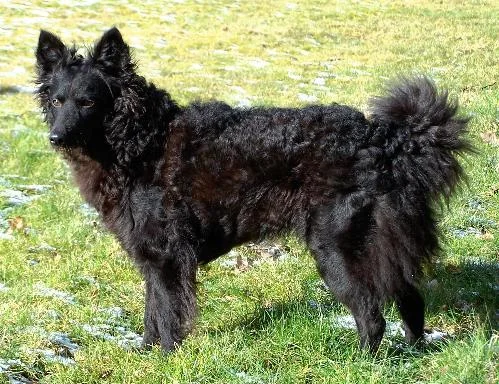
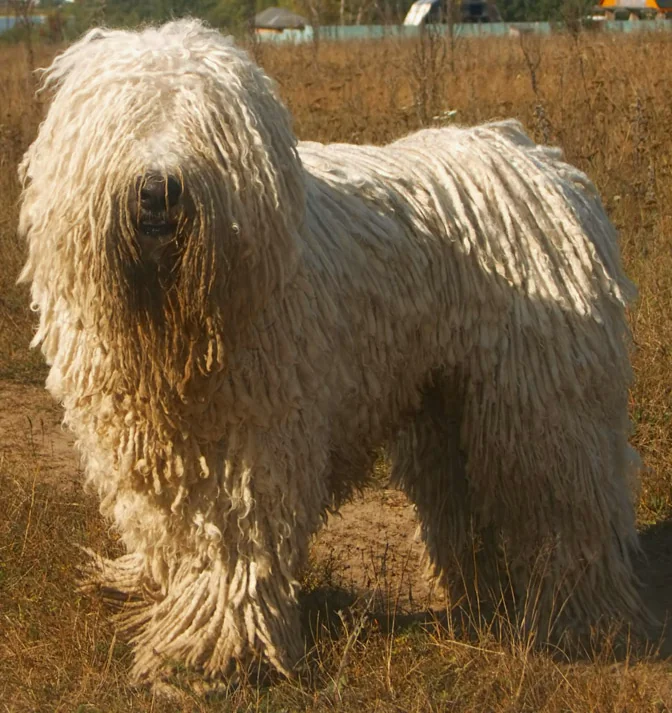
Two Hungarian breeds with cords
The Puli and the Komondor both come from Hungary. According to the FCI, their ancestors probably arrived in the Carpathian Basin with the migrating Magyars. Both breeds wear a coat of tassels and cords. That is largely where the similarity ends. [1] [2]
Size: a medium-sized dog next to a giant
Marley is a Puli, so what I know best is the medium-sized dog.
The FCI standard gives a Puli male a height at the withers of 39 to 45 centimetres and a weight of 13 to 15 kilos; a female is 36 to 42 centimetres and 10 to 13 kilos. A Komondor male is at least 70 centimetres and weighs 50 to 60 kilos, a female at least 65 centimetres and 40 to 50 kilos. So you are choosing between a dog you can still lift and a dog that weighs as much as an adult person. [1] [2]
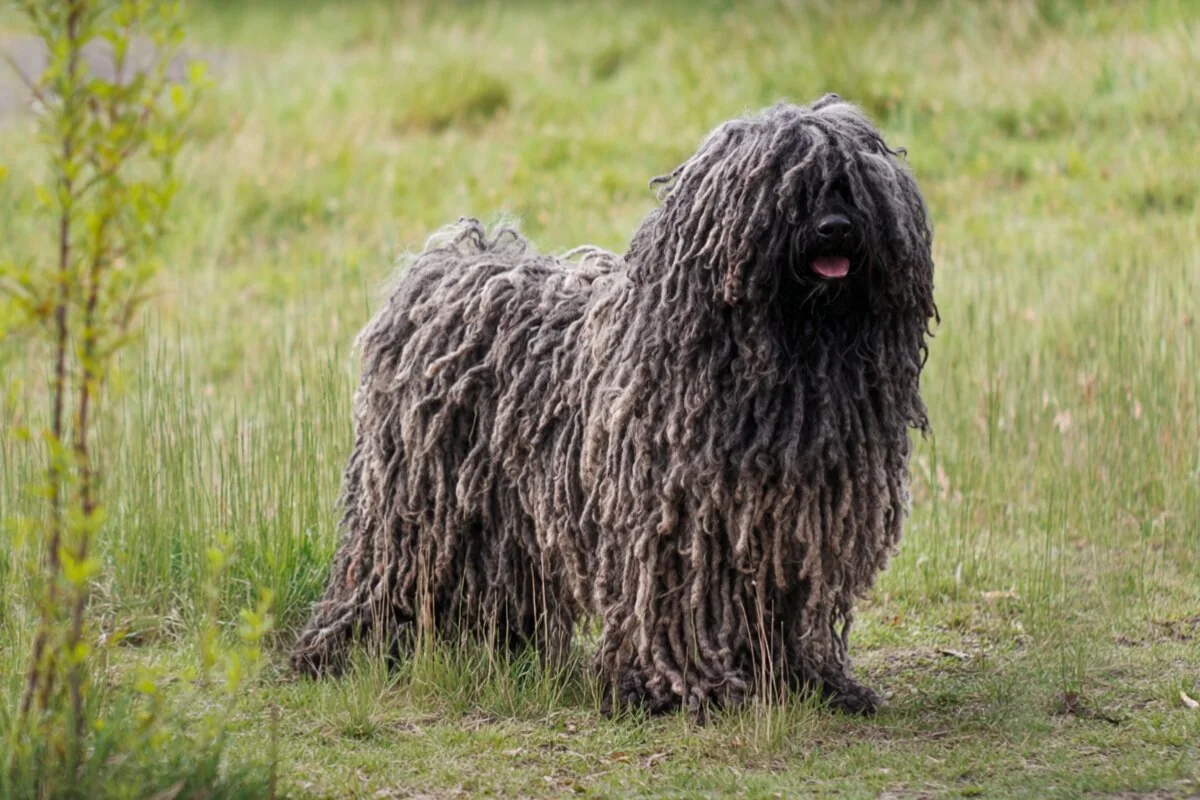
Work and temperament: herding or guarding
The Puli was bred to herd livestock. The FCI describes him as lively, extremely able to learn, fond of children and an excellent watchdog. The Komondor guarded the flock against predators. According to his breed standard he defends the animals, the farm and the home with imperturbable courage, is suspicious by nature and regards his territory as his own. A Puli moves with the shepherd; a Komondor was bred precisely to watch over the flock on his own. [1] [2] [3]
Training and visitors
Early, friendly socialisation matters for both breeds. The AKC calls the Komondor independent and protective, and says he needs a firm, experienced hand in training. Hill's recommends patience, consistency and rewards, and advises letting strangers keep their distance until the dog seeks contact himself. With a Komondor, expect a dog that looks critically at visitors. That calls for experience and clear arrangements for guests. [4] [5] [7]
Coat care: the same idea, a different size
I write more about cords in my own care guides about Marley.
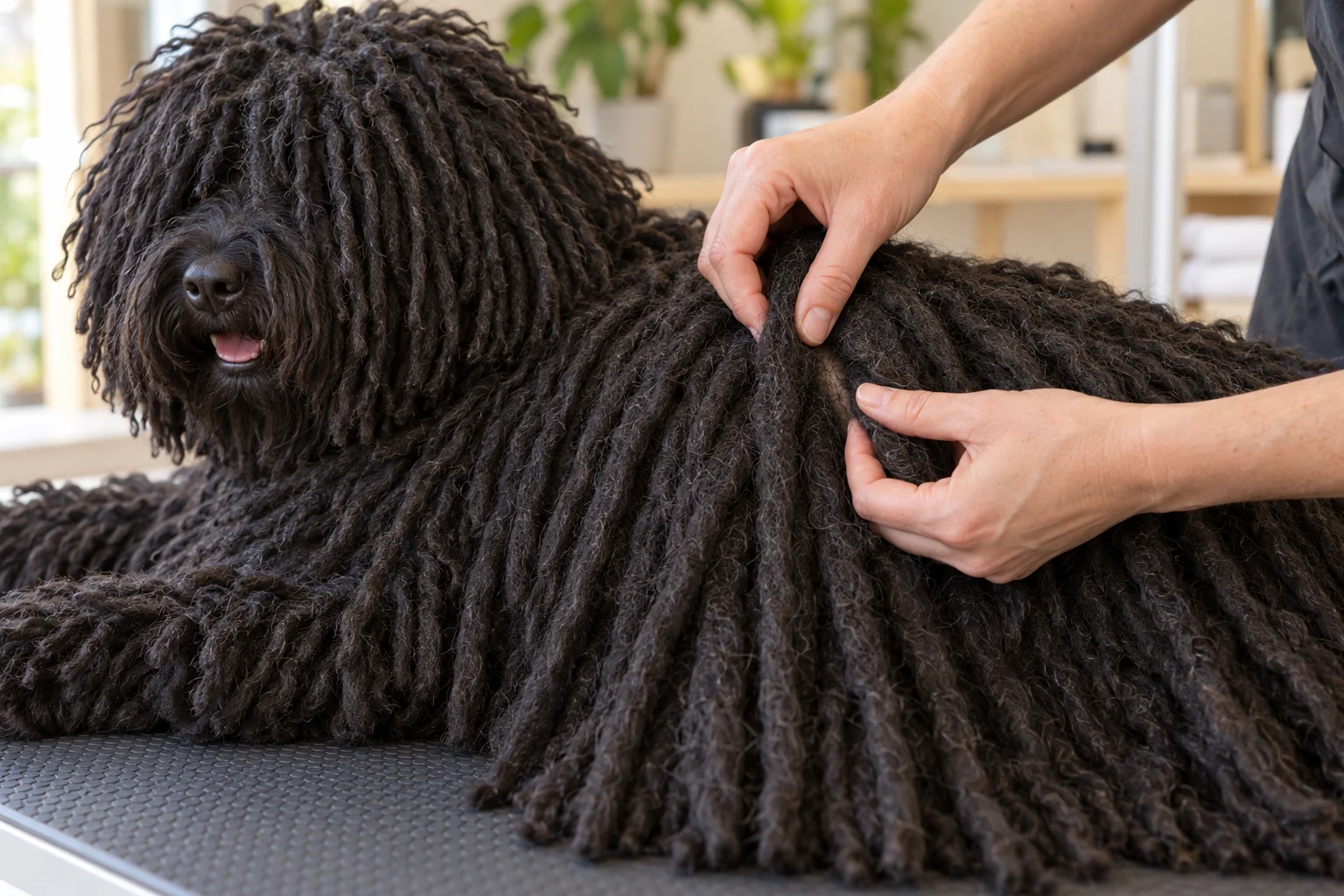
In both breeds, cords form because the coarser topcoat holds on to the soft undercoat. You separate new growth by hand close to the skin so cords don't grow together. According to Hill's, a Komondor's cords start forming at around 8 to 12 months; during that phase you separate them every two to three days, and weekly after that. Bathing and especially drying a Komondor takes hours, and the coat must dry completely to prevent odour and skin problems. The AKC warns that cords can stay damp for up to 48 hours if left to air-dry. With a Puli the principle is the same, but there is far less dog to wash and dry. [3] [4]
Space, heat and everyday life
Hill's describes the Komondor as a dog with moderate exercise needs that suits a calm household with a large, securely fenced garden best, and an apartment less well. In warm weather he overheats quickly. According to the FCI the Puli is lively and his present build suits him to dog sports. For a Puli a big garden matters less than daily exercise and something to do together; for a Komondor, space and a sturdy fence weigh heavily. [4] [1]
This way you make it clear
- 01
Hold your normal week up against both breed descriptions: exercise, grooming and visitors.
- 02
Meet adult dogs of both breeds, ideally at the owner's home.
- 03
Ask owners how long washing and drying really takes for them.
- 04
Discuss health and the parents' health screening with the breeder. [6]
You may be wondering…
Is a Komondor a large Puli?
No. They share their Hungarian origin and their cords, but the Komondor is a flock guardian of at least 65 centimetres and the Puli a medium-sized herding dog. [1] [2]
The sources for my story
- FCI · Puli, standard 55 ↗
- FCI · Komondor, standard 53 ↗
- AKC · Meet the Corded Breeds ↗
- Hill's Pet Nutrition · Komondor: temperament and care ↗
- AKC · Komondor ↗
- LICG · Where do I buy my puppy? ↗
- LICG · Socialization of the puppy ↗
I write from my experience with Marley. The general care information above has been supplemented with these sources. The illustrations do not document a grooming procedure performed on Marley. If your dog has symptoms, seek advice specific to your dog.